Author name: Marketing Team

Heat Wave in India 2026 during home power cut
Blog

Heat Wave in India 2026: 7 Smart Ways to Stay Cool During Power Cuts

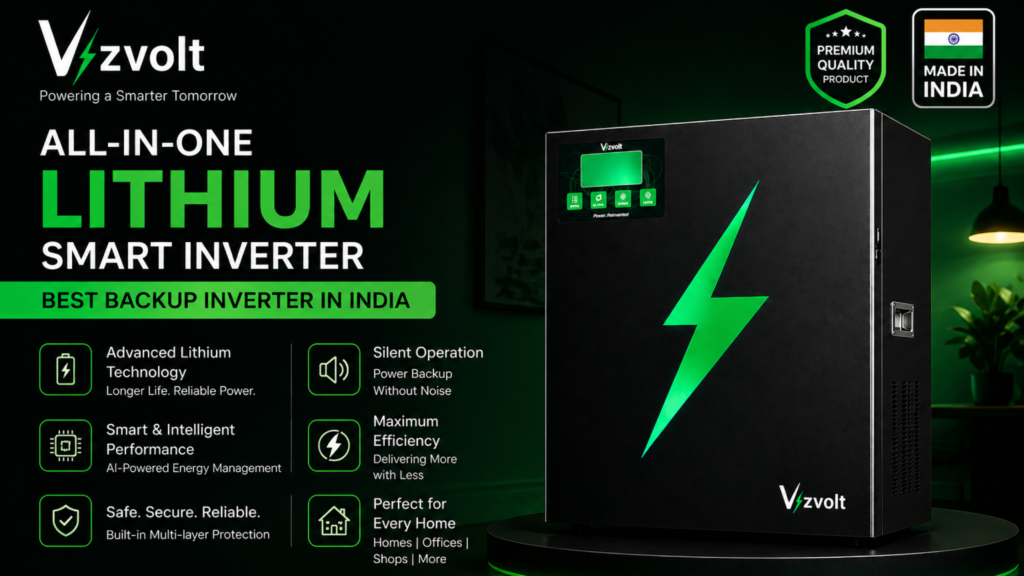
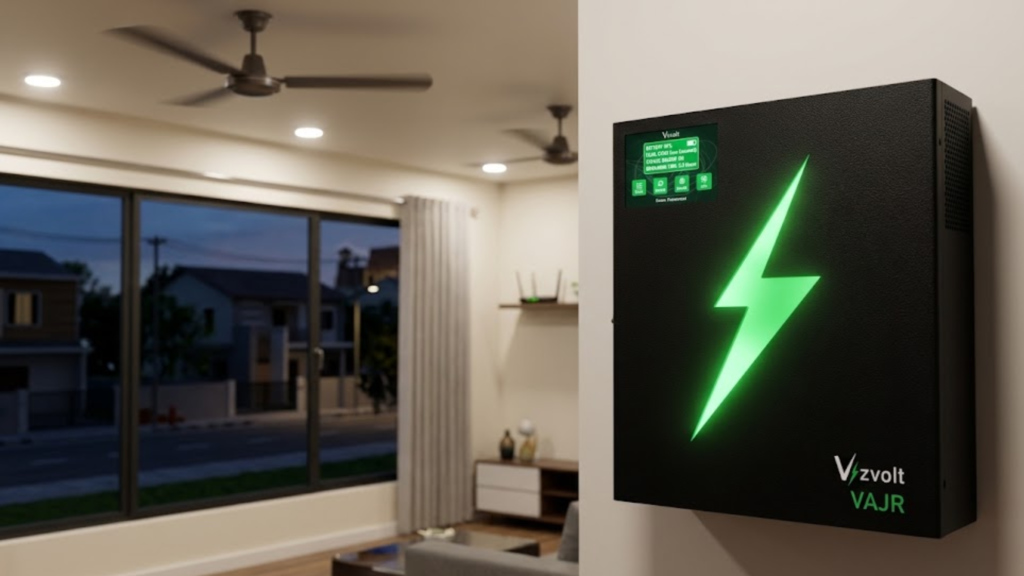
Temperatures exceed 47°C. Power grids are failing. Here’s how Indian families are surviving – and how Vizvolt is changing The Heat Wave in India 2026 is already making daily life harder. Rising temperatures, humid rooms, and sudden power cuts are turning normal summer days into stressful ones. The 2026 heat wave in India is making daily life difficult. Rising temperatures, humid rooms, and frequent power cuts are transforming normal summer days into stressful ones. When the electricity goes out during extreme heat, comfort can vanish quickly. Fans stop.Rooms become stuffy.Phones lose charge.Sleep gets disturbed. Many families are now searching for practical solutions that actually work. The good news is simple: with the right habits and smarter backup planning, you can stay comfortable even during outages. This guide shares 7 smart ways to stay cool during power cuts, plus how modern backup systems like Vizvolt fit naturally into today’s homes. Why Power Cuts Feel Worse During Heat Waves Heat waves create more pressure on power demand. As usage rises, interruptions and voltage issues often become more common. When power cuts happen during hot weather: According to the India Meteorological Department, heat wave conditions are becoming more frequent in many regions. That means home preparedness matters more than ever. 7 Smart Ways to Stay Cool During Power Cuts 1. Block Direct Sunlight Early Keep curtains or blinds closed during peak sunlight hours. Sunlight entering windows increases indoor heat quickly. Blocking it early helps rooms stay cooler for longer. This is one of the easiest and most effective summer habits. 2. Use Natural Airflow Open opposite windows when outside air becomes cooler in the evening or early morning. Cross ventilation helps remove trapped hot air and improves comfort naturally. Even small airflow changes make a big difference. 3. Keep Water Ready During a heat wave, hydration matters. Always keep drinking water available for: Simple hydration supports body cooling naturally. 4. Use Energy-Efficient Lights Traditional bulbs add heat to the room. Switching to LED lights helps reduce: Also Read: Lithium vs Lead Acid Inverter Batteries India 2026 5. Use Essential Appliances Only When power goes off, run only what truly matters: Avoid unnecessary load to improve backup time. This helps any system perform better during long cuts. 6. Upgrade to Smarter Power Backup Many traditional inverters struggle during summer because of: Modern homes now prefer cleaner and smarter options. Vizvolt , an all-in-one lithium smart inverter, is built for modern living with: So while heat rises outside, comfort stays inside. 7. Prepare Before Peak Hours The hottest discomfort usually happens: Charge phones, fill bottles, and check backup status in advance. Small preparation removes major stress later. Why Smarter Homes Need Smarter Backup Today’s homes depend on electricity for much more than lights. We rely on power for: That is why backup is no longer optional convenience. It is part of modern living. Older systems were built for another time. Today’s needs demand something simpler, cleaner, and more efficient. That is where Vizvolt fits naturally. How Vizvolt Smoothly Solves Summer Problems During the Heat Wave in India 2026, people do not want bulky batteries, smell, water refills, or uncertain backup. They want peace of mind. Vizvolt VAJR offers: It quietly works in the background while your family stays comfortable. Stay Cool. Stay Powered. Stay Safe. The 2026 heat wave is not something you can ignore – but it is something you can prepare for. From free zero-electricity tricks to smart power backup systems, every step you take today protects your family tomorrow. If power cuts are making your summer unbearable, it’s time to look at a real solution. Vizvolt’s home backup systems are trusted by hundreds of thousands of Indian homes – and with prices starting at an accessible range, it’s never been easier to stay powered through India’s hottest summers. Check :Vizvolt Plans & Pricing Also Read: Inverter Low Backup Problem? 8 Real Reasons & Fixes FAQ Q1: How dangerous is the 2026 heat wave in India? The 2026 Indian heat wave is one of the most severe in recorded history. The India Meteorological Department (IMD) recorded temperatures exceeding 47°C in Delhi, Rajasthan, and Uttar Pradesh. Heat-related deaths have doubled compared to 2025. Vulnerable groups — elderly, children, outdoor workers – face the highest risk. Follow NDMA heat wave guidelines and never ignore early symptoms like dizziness, nausea, or stopped sweating. Q2: How can I stay cool at home without AC during power cuts? You can stay much cooler by using the following methods: hang wet curtains on west-facing windows, use clay pot evaporative coolers (matkas), sleep on the floor, and stay hydrated with oral rehydration solutions (ORS) and coconut water. For powered cooling, consider a Vizvolt backup power system to run fans even during 12-hour outages. Q3: Which areas of India are worst affected in 2026? As of April 2026, the states most severely affected by heat waves include Rajasthan, Delhi-NCR, Uttar Pradesh, Madhya Pradesh, Maharashtra (Vidarbha), Andhra Pradesh, and Telangana. The IMD heat wave tracker provides real-time alerts at the district level. Power cuts are particularly severe in these regions, lasting anywhere from 8 to 14 hours per day time district-level alerts. Power cuts are most severe in these regions, running 8–14 hours per day. Q4: What is the best power backup for fans during summers? The ideal backup solution for Indian homes during summer power cuts is a lithium-ion or LiFePO4-based UPS or battery backup system. Vizvolt’s home energy backup is specifically designed to handle India’s voltage fluctuations and can power three ceiling fans and LED lights for over eight hours. Additionally, it is compatible with solar energy. designed for India’s voltage fluctuations and can run 3 ceiling fans + LED lights for 8+ hours. It’s also solar-compatible.

low backup problem
Blog

Inverter Low Backup Problem? 8 Real Reasons & Fixes

Every Indian household has been there. It’s 43°C outside. The ceiling fans are spinning. The kids are studying. And then – the inverter beeps, flickers, and dies. Thirty minutes of backup when you expected four hours. The inverter low backup problem is one of the most searched issues during summer, especially in areas where power cuts can last for many hours a day. Whether you are dealing with frequent outages in a city or town, a failing inverter backup is more than just inconvenient – it can disturb your daily routine, work, studies, and comfort. This guide gives you the exact reasons your inverter is failing, the formula to calculate your correct backup time, and – if your current setup is beyond fixing – why thousands of Indian homes are upgrading to the Vizvolt VAJR, the all-in-one lithium smart inverter built for Indian summers. 8 Common Causes of Inverter Low Backup Problem Understanding your low backup problem starts with diagnosing the root cause. Most cases fall into one of these eight categories: 1. Old or Degraded Battery After 3–4 years, lead-acid batteries lose 40–60% of their original capacity. A battery rated 150Ah may only deliver 80Ah by year 4. Fix: Test battery voltage. If below 12V at full charge, replace it. 2. Overloading the Inverter Running ACs, geysers, or washing machines on a home inverter pushes it far beyond its rated capacity, draining the battery in minutes. Fix: Check your inverter’s VA rating. Disconnect heavy appliances during power cuts. 3. Low Electrolyte / No Water Top-Up Lead-acid batteries need distilled water every 45–60 days. Exposed plates cause irreversible sulphation and capacity loss. Fix: Top up with distilled water only. Never use tap water or acid. 4. Loose or Corroded Wiring Bad connections cause internal resistance, meaning more energy is wasted as heat than reaches your appliances. Fix: Clean terminals with baking soda paste. Tighten all connections. Replace damaged cables. 5. Extreme Summer Heat In Indian summers (40–47°C), battery chemical reactions accelerate. Batteries self-discharge faster and capacity drops by up to 20%. Fix: Keep the inverter in a ventilated, shaded spot. Avoid direct sunlight or closed rooms. 6. Wrong Battery Size for Load A 100Ah battery with a 1500VA inverter running 10 appliances will drain in 30 minutes. The math simply doesn’t work. Fix: Use the backup formula below to choose the right battery capacity for your actual load. 7. Charging Problem / Short Supply Window If MSEDCL or TNEB power returns for only 1–2 hours, and your inverter has a slow charger, the battery never reaches full charge. Fix: Use an inverter with fast-charging capability. Vizvolt VAJR’s smart charger maximises every minute of supply. 8. Old Inverter Technology Square-wave and old modified sine-wave inverters are inherently less efficient. They waste 15–25% of battery energy as heat during conversion. Fix: Upgrade to a pure sine wave inverter with high conversion efficiency (95%+). How to Calculate Inverter Backup Time (Simple Formula) Before blaming your inverter, verify your inverter backup time mathematically. The formula is straightforward: BACKUP FORMULA Backup Time (hours) = [Battery Capacity (Ah) × Battery Voltage (V) × Efficiency] ÷ Total Load (Watts)   STANDARD EFFICIENCY RATES: Lead-acid inverter: 70–75% Pure sine wave lithium: 92–95% The inverter low backup problem is common in old battery systems. Real Example: Typical Indian Home Setup Let’s calculate backup for a home running 3 ceiling fans + 5 LED bulbs + 2 phone chargers — a very common load scenario during evening power cuts: Appliance Qty Watts Each Total Watts Ceiling Fan 3 75W 225W LED Bulb 5 10W 50W Phone Charger 2 10W 20W Total Load     295W Total Load = 295 Watts Battery: 150Ah at 12V (standard home inverter) LEAD-ACID CALCULATION: Backup = (150 × 12 × 0.72) ÷ 295 = 1296 ÷ 295 ≈ 4.4 hours (new battery) But a 3-year-old lead-acid battery retains only ~55% capacity: Actual backup = 4.4 × 0.55 ≈ 2.4 hours If your inverter gives less time, this inverter low backup problem needs quick attention. Vizvolt VAJR with lithium (95% EFFICIENCY): Backup = (150 × 12 × 0.95) ÷ 295 = 1710 ÷ 295 ≈ 5.8 hours And lithium retains 95% capacity even after 5 years = ~5.5 hours backup Vizvolt helps solve the inverter low backup problem with lithium technology. This is why the inverter backup time India context matters. In peak summer, when temperatures hit 44°C in interior Maharashtra or Rajasthan, a degraded lead-acid battery might give you just 45 minutes on that same load. The lithium difference is not a marketing claim – it’s basic battery chemistry. According to the Central Electricity Authority, peak load shedding in northern India averages 4-6 hours daily in summer months. Not every inverter low backup problem requires a full replacement. Use this decision guide: REPAIR – Do This If… REPLACE – Time to Upgrade If… Battery is less than 3 years oldPlates just need distilled water top-upCharging unit failed but battery is fineMinor wiring or connection issueLoad suddenly increased beyond capacity Battery is 4+ years old with weak output Plates are sulphated or swollen Inverter is a lead-acid model (10+ years old)Backup dropped from 4 hrs to under 1 hr Repair cost > 40% of new inverter price Pro Tip: If your total inverter + battery system is over 6 years old and runs on lead-acid technology, the repair vs replace math almost always favours replacement – especially with lithium prices dropping 40% over the last three years in India. Inverter dying in summer? Vizvolt VAJR gives 2–3x more backup. Zero maintenance. Built for India. → Shop Now at vizvolt.in Summer heat increases the inverter low backup problem in India. How Vizvolt VAJR Solves the Inverter Low Backup Problem Most Indian inverters were engineered in the 2000s for a different power landscape – fewer appliances, longer supply windows, and cooler summers. The Vizvolt VAJR was built from scratch for 2025 Indian homes: frequent cuts, shorter charging windows, extreme heat, and a growing load of modern appliances.

Inverter Low Backup Problem
Blog

Inverter Low Backup Problem: Why It Happens and How to Fix It

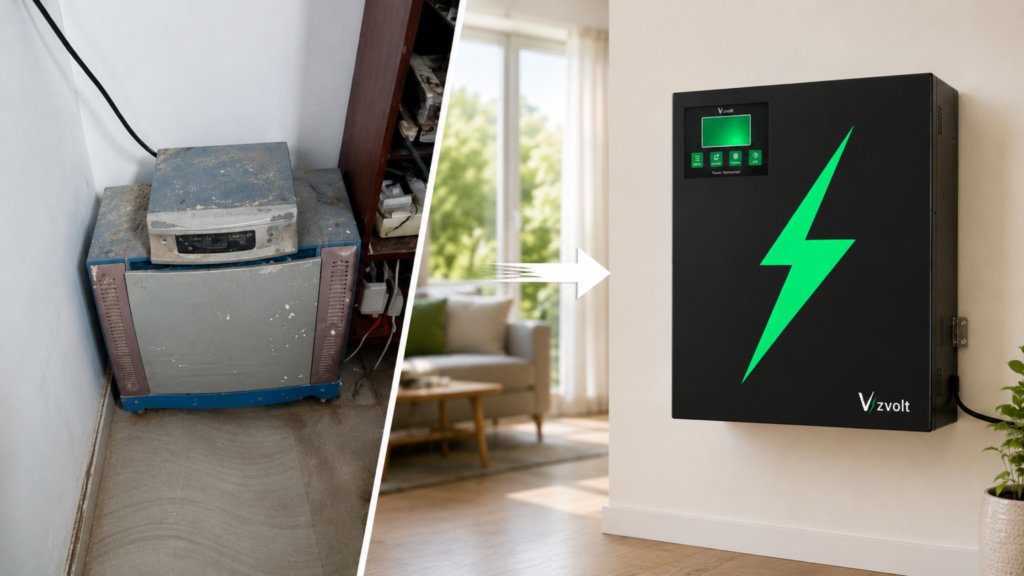
If your inverter runs out in 30 minutes during load shedding, here’s exactly why…Many Indian homes face this issue, especially in summer when power cuts are longer and frequent in states like UP, Bihar, Delhi, Haryana, and Rajasthan. You expect your inverter to support fans, lights, WiFi, and basic comfort. But instead, it dies quickly. This inverter low backup problem usually happens because of battery condition, overload, charging issues, or an outdated inverter system. The good news is that most causes are easy to understand – and many can be fixed. 8 Reasons Your Inverter Gives Low Backup 1. Old or Weak Battery This is the most common reason behind inverter low backup problem. Most lead acid batteries last around 3 to 5 years. After that, they lose capacity. Signs: If your battery is old, it may be time to replace it. An old battery is one of the biggest causes of inverter low backup problem in Indian homes. 2. Too Much Load on Inverter Many homes connect more appliances than the inverter can support. Example: This overload drains the battery faster. If you want to increase inverter backup, reduce non-essential appliances during outages. 3. Low Water Level in Battery Traditional lead acid batteries need distilled water regularly. If water is low: This is a hidden reason many users ignore. 4. Bad Wiring or Loose Connections Loose terminals, thin wires, or poor installation waste power. Symptoms: Always check wiring quality. 5. Summer Heat and High Temperature In Indian summers, temperatures cross 40°C. Heat reduces battery efficiency, especially old lead acid batteries. This is why inverter backup time India often drops in May and June. 6. Wrong Battery Size Some homes use a small battery for larger loads. Example:150Ah battery trying to run: Result: Low backup. Battery size should match household usage. Too many appliances connected at once can quickly create an inverter low backup problem. 7. Charging Problem If battery is not fully charging, it cannot give full backup. Causes: If charging is incomplete, your inverter low backup problem will continue. 8. Old Inverter Technology Many homes still use systems installed 5–10 years ago. Older inverters often have: Modern systems give better usable backup from the same battery size. How to Calculate Inverter Backup Time Simple formula: Battery Voltage × Ah × Efficiency ÷ Load = Backup Hours Example: 12V battery × 150Ah = 1800Wh Usable at 80% efficiency = 1440Wh If load is 300W: 1440 ÷ 300 = 4.8 hours So your inverter may give around 4 to 5 hours backup. Real Example for Indian Home Load: Total Load = 275W With a healthy 150Ah battery: Approx backup = 5+ hours If you are getting only 1–2 hours, then you have an inverter low backup problem. How to Increase Inverter Backup If you want to increase inverter backup, follow these steps: Use Only Essential Load During power cuts run: Avoid: Maintain Battery Properly For lead acid batteries: Reduce Heat Exposure Keep inverter in a cool, shaded indoor area. Upgrade to Efficient Appliances Use LED lights and BLDC fans to reduce load. Replace Weak Battery Sometimes battery replacement solves everything. When to Replace vs Repair Your Inverter Repair If: Replace If: In many cases, replacing an old setup is smarter than repeated repairs. How Vizvolt VAJR Solves Low Backup Problem Traditional inverter systems lose performance over time. Vizvolt VAJR is India’s all-in-one lithium smart inverter built to remove common backup problems. If repairs keep repeating, the inverter low backup problem may be due to outdated technology. Why It Works Better Lithium Battery Technology More Usable Power Unlike lead acid systems, lithium delivers more real backup capacity. Smart App Monitoring Track: No guessing. No Water, No Maintenance No monthly water filling. No acid smell. Wall Mounted Compact Design No bulky battery on the floor. Better for Indian Summers Designed for harsh weather and daily outages. If you frequently face inverter low backup problem, upgrading to Vizvolt VAJR can be a smarter long -term solution. Frequently Asked Questions Why does my inverter run out so fast? The most common reasons are an old battery, overload, weak charging, or an inverter low backup problem caused by poor maintenance. How to increase inverter battery backup? Reduce load, maintain battery, use efficient appliances, and replace weak batteries. What is normal backup time for home inverter? Depends on battery and load. A 150Ah battery with lights + fans may give 4–6 hours. How do I know if my inverter battery is weak? Low backup, heating, slow charging, or battery older than 4 years. Which inverter gives best backup in India? Modern lithium systems like Vizvolt VAJR offer higher efficiency and better usable backup.

lithium vs lead acid inverter batteries
Blog

Lithium vs Lead Acid Inverter Batteries India 2026

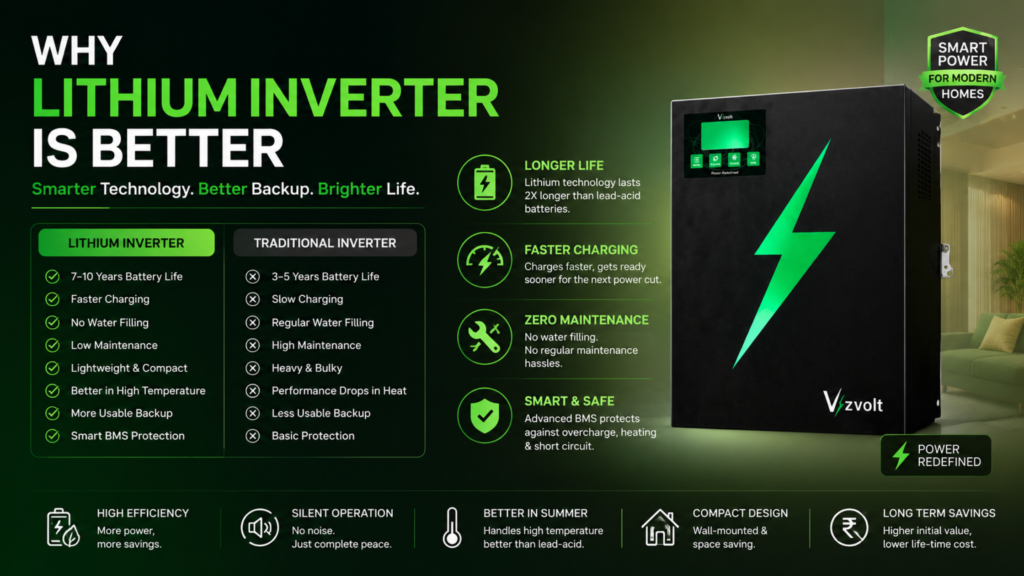
Every Indian home knows the pain of a power cut. And almost every home with an inverter is still using an old lead acid battery that leaks, smells, needs water every month, and dies in 3–4 years. In 2026, there is a much better choice: lithium vs lead acid inverter batteries is no longer a close comparison. Lithium has quietly become the smarter, safer, and more cost-effective solution for millions of Indian families. This guide breaks it all down – with real prices in rupees, honest comparisons, and one clear winner. Whether you live in Delhi, Mumbai, Chennai, or a Tier-2 city where power cuts are long and frequent, this article will help you make the right choice before buying your next inverter battery in India. The lithium vs lead acid inverter batteries debate is settled – here is the data. What is a Lead Acid Inverter Battery? Lead acid batteries have been powering Indian homes for over 30 years. They are the big, heavy, rectangular boxes you see in almost every home – usually kept in a corner or under a table, leaking white fumes and asking for distilled water every few weeks. Here is what you need to know about lead acid inverter batteries: For years, lead acid was the only affordable option. But those days are over. What is a Lithium Inverter Battery? Lithium Batteries are especially those using LiFePO4 (Lithium Iron Phosphate) chemistry — are the new standard for modern Indian homes. LiFePO4 is the safest lithium chemistry available, with no risk of fire or thermal runaway, unlike regular lithium-ion batteries in phones or laptops. When discussing lithium vs lead acid inverter batteries, lithium stands out because it solves many old problems homeowners still face. Here is what makes a LiFePO4 inverter battery India buyers are choosing in 2026 so different: lithium vs lead acid inverter batteries, Some lithium inverters in India now come with built-in LiFePO4 batteries – meaning the inverter and battery are one single unit. This is called an all-in-one lithium smart inverter, and the Vizvolt VAJR is the first of its kind in India. Lithium vs Lead Acid Inverter Batteries: How Lithium Works This lithium vs lead acid inverter batteries comparison table covers every factor. Let us compare both technologies side by side on every factor that matters for Indian homes in 2026: Feature Lithium (LiFePO4) Lead Acid Winner Upfront Price ₹25,000 – ₹55,000 ₹8,000 – ₹18,000 Lead Acid 10-Year Total Cost ₹35,000 – ₹55,000 (one time) ₹40,000 – ₹72,000 (3 replacements) ✓ Lithium Lifespan 7–10 years (5,000 cycles) 3-5 years (500–800 cycles) ✓ Lithium Maintenance Zero – fully sealed Top up water monthly ✓ Lithium Backup Efficiency 95%+ usable capacity 70–75% usable ✓ Lithium Weight 15–25 kg 50–65 kg ✓ Lithium Safety No gas, no acid, no fire risk Releases hydrogen gas ✓ Lithium Charging Time 2–4 hours 8–14 hours ✓ Lithium Temperature Performance Works fine up to 45°C Degrades in Indian summer heat ✓ Lithium Smart Monitoring App + BMS dashboard None ✓ Lithium Warranty 5–10 years 1–3 years ✓ Lithium Environmental Impact No toxic lead, recyclable Heavy toxic lead waste ✓ Lithium lithium vs lead acid inverter batteries the verdict: Lithium wins 10 out of 12 categories. Lead acid only wins on upfront price — and even that advantage disappears within 4–5 years of ownership. Lithium vs Lead Acid Inverter Batteries for Indian Homes lithium vs lead acid inverter batteries, India has some unique challenges that make lithium batteries an especially smart choice: This is why lithium vs lead acid inverter batteries is no longer just a comparison. It is a lifestyle decision.If you ask any electrician or inverter technician in India in 2026, they will tell you the same thing: “Lead acid is old technology. Lithium is the present and the future.” Why Vizvolt VAJR is the Best Lithium Inverter in India There are a few lithium inverter options available in India in 2026, but none quite like the Vizvolt VAJR. It is India’s first all-in-one lithium smart inverter – meaning the inverter, the LiFePO4 battery, and the Battery Management System (BMS) are all built into one compact, wall-mountable unit. No separate battery. No heavy box on the floor. No messy wiring between inverter and battery. Here is what makes Vizvolt VAJR stand out from every other best lithium inverter India option: No Maintenance Ever The Vizvolt VAJR uses sealed LiFePO4 technology. There is no water to add, no terminals to clean, no acid to worry about, and no gas to ventilate. Install it once and forget about maintenance for the next decade. This is especially valuable for working families, seniors, and anyone who simply does not have time to babysit a battery. 7-10 Year Battery Life The VAJR’s inbuilt LiFePO4 battery is rated for over 3,000 charge-discharge cycles. In a typical Indian home with 1–2 full cycles per day, that translates to 7 to 10 full years of reliable backup power. Compare that to replacing a lead acid battery every 3–4 years, and the savings are clear. The lithium inverter price in India for the Vizvolt VAJR pays for itself long before it needs replacing. Smart App Monitoring The Vizvolt VAJR connects to your smartphone via its smart monitoring system. You can see battery charge percentage, power input, load consumption, and health status — all from your phone, anywhere. Get alerts when the power goes, track how much backup you have left, and monitor the system’s health over time. No other inverter in this category gives Indian homeowners this level of visibility and control. Inbuilt LiFePO4 No separate battery needed. One unit, complete power solution. Smart App Control Monitor battery, load & alerts from anywhere on your phone. Zero Maintenance No water. No acid. No gas. Fully sealed and worry-free. Fast Charging Full charge in 2–4 hours. Ready for the next power cut. Wall-Mountable Saves floor space. Compact design for modern Indian homes. Indian Climate Ready Designed to perform in India’s heat, humidity & tough conditions. The Vizvolt VAJR is not just a product upgrade – it is a lifestyle upgrade.

portable power backup
Blog

Carry Your Power Wherever Life Takes You

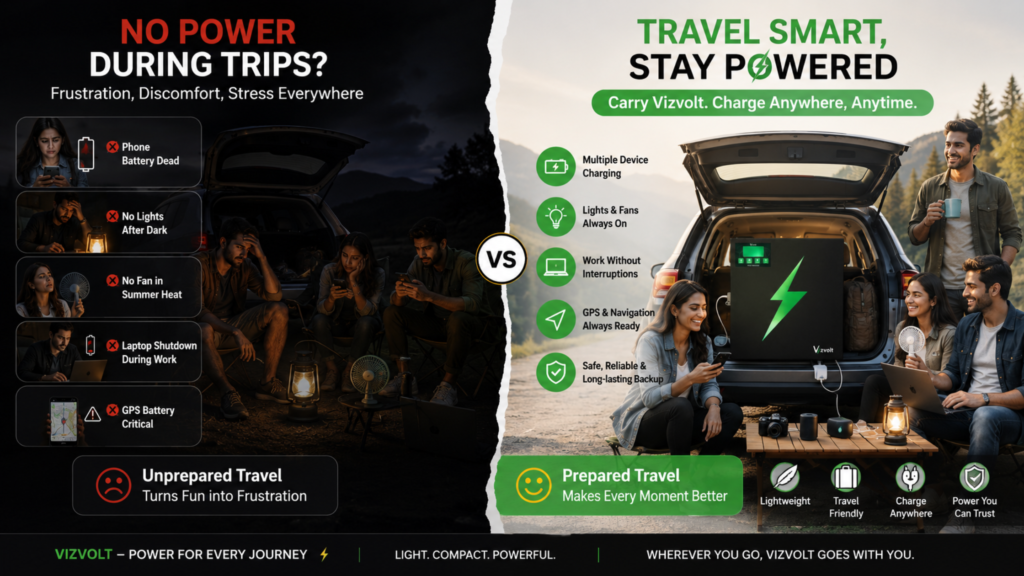
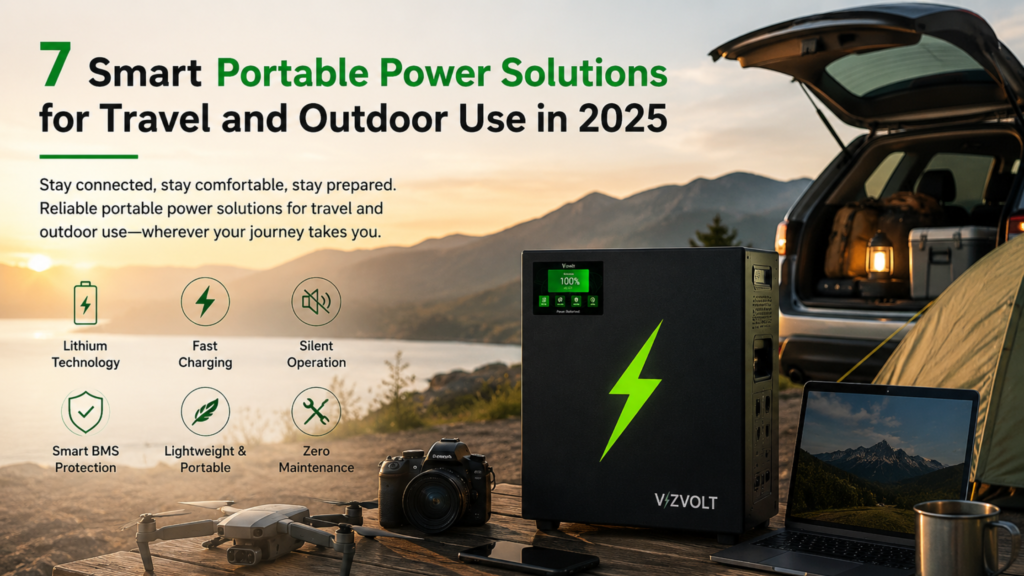
Portable power backup is becoming an essential part of modern living, especially as our lifestyles become more flexible and mobile. Today, life is no longer limited to one place. You move between home, work, travel, and social events. But one thing remains constant – your need for reliable power. And this is where the problem begins. Power is still fixed to a location, while your life is not. Why Portable Power Backup Matters Today Think about your everyday situations. You could be: Now imagine a sudden power cut in any of these moments. Your devices stop.Your comfort disappears.Your plans get interrupted. This is exactly why portable power backup is becoming important. It gives you the freedom to stay powered, no matter where you are. The Problem with Traditional Power Systems Traditional inverter systems were never designed for flexibility. They come with: These systems work inside homes, but they cannot move with your lifestyle. So when you step outside, your power stays behind. What Modern Users Expect Today’s users want more than just backup. They want: Most importantly, they want portable power backup that adapts to their routine. 7 Smart Ways Portable Power Backup Helps You 1.Travel and Road Trips During long journeys, power access is limited. With portable power backup, you can keep your devices running and stay comfortable throughout your trip. 2.Outdoor Events and Functions Power interruptions during weddings or gatherings can affect the entire experience. A reliable power backup ensures everything runs smoothly. 3.Remote Work and Work From Anywhere Meetings, calls, and deadlines depend on electricity. Portable power ensures your work continues without disruption. 4.Emergency Situations Unexpected outages can happen anytime. Having portable power backup keeps you prepared and reduces stress. 5.Weekend Getaways Short trips should be simple and relaxing. Power backup helps you enjoy your time without worrying about charging or electricity. 6.Daily Flexibility at Home Even within your home, having flexible power makes life easier. You can move and use it where needed. 7.Modern Lifestyle Needs Today’s lifestyle is dynamic. Your power solution should be just as flexible and reliable. A Smarter Way to Use Power Modern power solutions are designed differently. Instead of bulky systems, Vizvolt focus on simplicity and usability. They offer: This makes portable power backup feel effortless and integrated into daily life. Why This Matters for You Your life doesn’t stay in one place. You move between: Your power should move with you. With portable power backup, you are no longer dependent on fixed systems. You gain flexibility, comfort, and control. FAQ What is portable power backup? It is a system that allows you to use electricity without being fixed to a single location. Is portable power useful for travel? Yes, it ensures your devices and essentials stay powered during trips. Can I use it at home? Yes, it adds flexibility and convenience even within your home. Is it safe? Modern systems are designed to be safe, clean, and efficient. Conclusion This is exactly where Vizvolt quietly changes the experience. Instead of adding complexity, it simplifies power backup. With lithium technology, it removes the need for constant maintenance. With a clean, wall-mounted design, it saves space and blends into modern homes. With app-based control, it gives you visibility without effort. And with silent, fume-free operation, it makes power feel natural and unobtrusive. You don’t have to adjust your life around it. It simply fits in. Power should support your life, not limit it. With portable power backup, you get the freedom to stay connected, comfortable, and productive – wherever life takes you. Because in today’s world, power should move with you, not stay behind.

inverter not working during power cut problem
Blog

Inverter Not Working During Power Cut? 7 Critical Reasons You Must Know

Inverter not working during power cut is a common issue many homeowners face, especially when they rely heavily on backup during outages. You expect your inverter to work the moment power goes off. But instead… The lights go out.The fan stops.And your inverter does nothing. If your inverter is not working during power cut, it’s not just frustrating – it usually means something isn’t right in your system. The good news is, most of these issues are common and can be fixed once you understand the real cause. Why Your Inverter Is Not Working During Power Cut There isn’t just one reason behind this issue. In most cases, inverter not working during power cut happens due to battery problems, overload, or system faults. Let’s look at the most common causes. 1. Battery Is Not Charged Properly This is the most common reason behind inverter not working during power cut. If your battery is not fully charged, the inverter simply won’t have enough power to supply during a power cut. Signs: 2. Battery Is Old or Weak Over time, batteries lose their ability to hold charge. If your battery is 3-5 years old, it may not support your inverter properly. This can directly cause inverter not working during power cut situations. Result: Even if the inverter is ON, it won’t provide backup. 3. Loose or Faulty Wiring Sometimes the issue is not with the inverter, but with the connections. Loose wiring or poor installation can interrupt power flow. This is another hidden cause of inverter not working during power cut. Check for: 4. Overload on the Inverter If too many appliances are connected, your inverter may shut down to protect itself. This often leads to inverter not working during power cut, as the system shuts down for safety. Common overload sources: 5. Inverter in Protection Mode Modern inverters have safety features. If there is: This can temporarily cause inverter not working during power cut. 6. Fuse or Internal Fault A blown fuse or internal issue can stop the inverter from working. This usually requires inspection by a technician. 7. Switch or MCB Issue Sometimes the inverter is working, but the power is not reaching your home due to: Signs You Should Not Ignore If your inverter is not working during power cut, you may also notice: These are early warning signs. How to Fix This Problem Here are simple steps you can take: Check Battery Status Make sure it is fully charged and in good condition. Reduce Load Use only essential appliances during power cuts. Inspect Wiring Check for loose or damaged connections. Reset the System Sometimes a simple restart can fix minor issues. Call a Technician If the problem continues, professional inspection is recommended. A Smarter Way to Avoid These Problems If you frequently face situations where your inverter is not working during power cut, it may not just be a small issue. It could be the system itself. Vizvolt are designed to reduce these everyday problems. They offer: Instead of constant troubleshooting, the system works quietly in the background. Why This Matters for Your Home Power backup is not just about electricity. It affects: When your inverter fails during a power cut, it disrupts everything. A reliable system ensures that your home stays functional without interruptions. That’s why solving inverter not working during power cut is important for every home. FAQs Why is my inverter not working during power cut? It can be due to battery issues, wiring problems, overload, or internal faults. Can I fix inverter issues myself? Basic checks can help, but technical issues need expert inspection. How long does an inverter battery last? Typically 3–5 years depending on usage and maintenance. When should I replace my inverter? If problems are frequent and performance is declining, it may be time to upgrade. Conclusion If your inverter is not working during power cut, don’t ignore it. Small issues today can turn into bigger problems tomorrow. Understanding the cause and fixing it early can save time, money, and frustration. Because power backup should feel reliable – not something you have to worry about every day.

Inverter overheating problem
Blog

Inverter Overheating Problem: Causes and Solutions You Should Know

Inverter overheating problem is one of the most common issues faced in many Indian homes, especially during heavy usage or extreme weather. You may notice your inverter getting unusually hot, shutting down unexpectedly, or not performing as it should. These are not random issues. They are signs that your system is under stress. If ignored, overheating can reduce performance, damage components, and even shorten the life of your inverter. Why Inverter Overheating Problem Happens There are several reasons behind an inverter overheating problem, and most of them are easy to identify. 1. Overload on the Inverter Running too many appliances at the same time puts extra load on your system. This is one of the main causes of inverter overheating problem in homes. Example: When the load exceeds capacity, the inverter generates more heat. 2. Poor Ventilation Inverters need proper airflow to stay cool. If your inverter is placed: …it can trap heat and lead to an inverter overheating problem. 3. High Ambient Temperature During summer or in poorly ventilated rooms, the surrounding temperature itself is high. This makes it harder for the inverter to cool down, increasing the chances of overheating. 4. Dust and Dirt Accumulation Dust can block ventilation and internal components. Over time, this reduces cooling efficiency and contributes to the inverter overheating problem. 5. Faulty Cooling Fan Inverters usually have internal cooling fans. If the fan is not working properly: This is a common but often ignored cause. 6. Battery Issues Battery problems can also lead to overheating. For example: These factors increase internal heat and worsen the inverter overheating problem. 7. Continuous Usage Without Break Using the inverter continuously for long hours without rest can also increase heat. This is common during long power cuts. Signs of Inverter Overheating Problem You should not ignore early warning signs. These signs clearly indicate an inverter overheating problem. How to Fix Inverter Overheating Problem The good part is that most overheating issues can be solved easily. Improve Ventilation Place your inverter in an open, well-ventilated area. Reduce Load Avoid using too many appliances during power cuts. Clean the System Regularly remove dust and dirt from the inverter. Check Cooling Fan Ensure the fan is working properly. Maintain Battery Keep battery in good condition and replace it when needed. Avoid Continuous Overuse Give the system short breaks if possible during long usage. A Smarter Way to Avoid Overheating If you frequently face inverter overheating problem, it may indicate limitations in your current system. Modern systems are designed to handle heat and load more efficiently. Solutions Vizvolt are built with better thermal management and smart monitoring. They help: This ensures your power backup runs smoothly without constant issues. Why This Matters for Your Home An overheating inverter is not just a technical issue. It affects: Ignoring an inverter overheating problem can lead to bigger failures and unexpected downtime. Useful Resources For better understanding of energy efficiency and electrical safety, you can refer to: FAQs Why does my inverter overheat? It can be due to overload, poor ventilation, battery issues, or high temperature. Is inverter overheating dangerous? Yes, if ignored, it can damage components and reduce system life. How can I cool down my inverter? Improve ventilation, reduce load, and clean the system regularly. When should I replace my inverter? If overheating is frequent and performance is declining. Conclusion The inverter overheating problem is common, but it should never be ignored. Small issues like poor ventilation or overload can quickly turn into bigger problems if not addressed. By understanding the causes and taking simple steps, you can keep your system running efficiently and safely. Because a reliable power backup should work quietly in the background – without stress, noise, or overheating.

inverter voltage spike protection during monsoon
Blog

Inverter Voltage Spike Protection: 5 Monsoon Risks You Shouldn’t Ignore

Inverter voltage spike protection becomes especially important during the monsoon season, when power supply becomes unstable and unpredictable. Many homeowners notice small changes during rainy days – lights flickering, backup dropping faster than usual, or the inverter switching more frequently. These issues may seem minor at first, but they often point to a deeper problem: voltage instability. And in most cases, the damage happens silently over time. Why Monsoon Affects Inverter Performance During monsoon, the electricity supply is more prone to fluctuations due to environmental and grid-related factors. You may experience: Without proper inverter voltage spike protection, your system is exposed to continuous stress, which affects both performance and lifespan. Understanding Voltage Spikes? Voltage spikes are sudden increases in electrical voltage that occur for a very short duration. They are commonly caused by: Even though these spikes last only milliseconds, they can cause long-term damage to your inverter’s internal components. How Voltage Spikes Impact Your Inverter 1. Damage to Internal Electronics Modern inverters contain sensitive electronic circuits. Repeated exposure to voltage spikes can damage these components, reducing efficiency and weakening overall inverter voltage spike protection. 2. Battery Charging Disruptions Voltage instability affects how your battery charges. This can result in: 3. Increased Heat and System Stress Fluctuating voltage creates internal stress, increasing heat inside the inverter. Over time, this affects reliability and reduces system stability. Signs Your Inverter Needs Better Protection If your inverter shows any of these signs during monsoon, it may lack proper inverter voltage spike protection: These are early warning signals that should not be ignored. How to Improve Inverter Voltage Spike Protection Protecting your inverter does not always require complex solutions. Simple steps can make a big difference. Use a Voltage Stabilizer A stabilizer helps regulate incoming power and reduces fluctuations before they reach your inverter. Ensure Proper Earthing Good earthing protects your system from sudden voltage surges and improves safety. Avoid Overloading During power cuts, using fewer appliances reduces strain on the system. Regular Maintenance Check wiring, battery condition, and connections before monsoon begins. A Smarter Approach to Handling Voltage Spikes Traditional inverter systems often rely on external solutions like stabilizers and manual checks. However, modern power backup systems are designed to manage these challenges internally. Solutions Vizvolt are built with intelligent systems that automatically handle voltage fluctuations. Instead of reacting to problems, they help prevent them. This results in: Why This Matters for Modern Homes Today’s homes depend on uninterrupted power for daily life – from lighting and appliances to work setups. During monsoon, when electricity becomes unpredictable, a reliable system becomes even more important. A system with strong inverter voltage spike protection ensures: Frequently Asked Questions Can voltage spikes damage an inverter? Yes, repeated voltage spikes can damage internal components and reduce efficiency over time. Why does my inverter behave differently during monsoon? Because power supply becomes unstable, affecting charging and overall performance. How can I protect my inverter from voltage spikes? Using stabilizers, proper earthing, and upgrading to modern systems with built-in protection can help. Do modern inverters handle voltage spikes better? Yes, advanced systems are designed to manage fluctuations more effectively. Conclusion Monsoon does not just change the weather – it changes how your power system behaves. Voltage spikes may not always be visible, but their impact builds over time. Ignoring them can lead to reduced performance and unexpected failures. By focusing on inverter voltage spike protection, you are not just protecting your inverter — you are ensuring comfort, reliability, and stability in your everyday life. Because power should feel dependable, even during the most unpredictable conditions.

inverter battery safety system in home
Blog

Is Your Inverter Safe? How Smart BMS Prevents Battery Fires at Home

Many homeowners only think about inverter battery safety when something goes wrong. Search queries like “can inverter battery explode,” “why does inverter battery heat up,” or “is inverter safe at home” are more common than expected. These concerns are valid, especially in homes that rely heavily on power backup systems. While performance is important, safety is equally critical. This is where inverter battery safety becomes essential, and why modern systems now include advanced protection like a Battery Management System (BMS). Understanding BMS in Inverter Battery Safety? A Battery Management System, or BMS, is a built-in system that monitors and protects your battery. It keeps track of: In simple terms, it ensures your inverter operates within safe limits at all times. Why Inverter Battery Safety Issues Happen Many users search for answers when they notice unusual behavior. Common causes of inverter safety issues include: Without proper monitoring, these issues can develop slowly and increase the risk of damage or failure. How Smart BMS Improves Inverter Battery Safety A smart BMS is designed to prevent these problems before they become serious. 1. Prevents Overcharging Overcharging can lead to heat buildup and battery damage. A smart BMS automatically stops charging when the battery reaches its limit. This helps maintain safe voltage levels and prevents stress on the system. 2. Controls Temperature Heat is one of the biggest risks in any battery system. A BMS continuously monitors temperature and takes action if it rises beyond safe limits. This may include reducing load or temporarily shutting down the system. 3. Protects Against Short Circuits Short circuits can occur due to wiring issues or internal faults. A smart BMS detects abnormal current flow and immediately cuts off power, reducing the risk of sparks or damage. 4. Ensures Balanced Charging Improper charging cycles reduce battery life and affect safety. A BMS manages charging and discharging in a controlled way, ensuring stability and long-term performance. 5. Provides Early Warning Signals Modern systems can detect early signs of issues. This allows users to take action before problems escalate, improving both safety and reliability. Limitations of Traditional Inverter Systems Many older inverter systems do not include advanced safety features. This means: This is why concerns about inverter battery safety are increasing, especially in homes using outdated systems. A Smarter and Safer Approach Modern power backup solutions are designed to address these concerns at the system level. Solutions Vizvolt integrate smart BMS technology to ensure safer operation. These systems are built to: The focus is not just on performance, but on creating a safer and more dependable experience. Why This Matters for Modern Homes Today’s homes depend on uninterrupted power for work, appliances, and daily comfort. A failure in power backup can be inconvenient, but a safety issue can be far more serious. With improved inverter battery safety, homeowners can rely on systems that are designed to protect both performance and environment. Frequently Asked Questions Can an inverter battery catch fire? In rare cases, yes. This usually happens due to overheating, overcharging, or lack of safety mechanisms. Why does an inverter battery heat up? Heat can be caused by overloading, poor ventilation, or inefficient charging. Is a lithium inverter safer than traditional systems? Lithium-based systems with built-in BMS are generally safer due to better control and monitoring. What does a BMS do in an inverter? It monitors battery performance and prevents unsafe conditions such as overcharging, overheating, and short circuits. Conclusion Inverter systems are no longer just about backup time. Safety has become an essential part of modern power solutions. A smart BMS plays a critical role in ensuring inverter battery safety by preventing common risks and maintaining stable operation. For homeowners, this means fewer concerns, better reliability, and a safer living environment.

inverter battery draining fast in modern home
Blog

Why Is My Inverter Battery Draining Fast? Causes & Easy Fixes (2026)

If your inverter battery draining fast has become a regular issue, you are not alone. Many households experience reduced backup time without clearly understanding the reason behind it. An inverter is meant to provide comfort during power cuts. But when the battery drains quickly, it disrupts daily life – from interrupted sleep to work delays. The good part is that this problem is usually caused by simple factors that can be identified and fixed easily. Common Reasons for Inverter Battery Draining Fast Understanding the root cause is the first step to solving the problem. If you’re unsure how to choose the right system, read our guide on choosing the best inverter for home in India.” 1. Excess Load on the Inverter One of the biggest reasons for an inverter battery draining fast is overloading. During power cuts, multiple appliances are often used at the same time: This increases the load on the inverter, causing the battery to drain much faster than expected. Solution: Use only essential appliances during power cuts. Reducing load can significantly improve backup time. 2. Aging Battery Batteries lose their efficiency over time. If your battery is more than a few years old, it may not hold charge properly. Signs of aging include: This is a common cause of inverter battery draining fast in older systems. 3. Incomplete Charging Sometimes the battery does not get fully charged due to: Even if the indicator shows full charge, the battery may not have stored enough energy, leading to faster drain. Solution: Check wiring and ensure your inverter gets enough charging time. 4. Poor Maintenance For traditional lead-acid batteries, maintenance plays a crucial role. Neglecting maintenance can lead to: Over time, this results in an inverter battery draining fast problem. 5. High Temperature and Poor Placement Heat affects battery performance significantly. If your inverter is placed: …it can cause faster battery discharge. Solution: Place your inverter in a cool, ventilated space. 6. Incorrect Inverter Capacity If your inverter is not designed to handle your home’s power requirements, it will struggle to provide adequate backup. As homes upgrade with more appliances, older systems may not keep up, leading to frequent inverter battery draining fast issues. 7. Limitations of Traditional Technology Traditional inverter systems, especially lead-acid based ones, have limitations: Even with proper care, these systems may not deliver consistent results. How to Fix Inverter Battery Draining Fast Here are practical steps you can take: These changes can improve performance, but they may not solve long-term issues if the system itself is outdated. A Smarter Long-Term Solution If you are constantly dealing with an inverter battery draining fast problem, it may be time to rethink your approach. Modern systems are designed to eliminate many of these common issues. Solutions Vizvolt focus on providing a more stable and effortless experience. Instead of managing multiple problems, they simplify the entire system. Key advantages include: This approach reduces the everyday burden of managing power backup. Frequently Asked Questions Why is my inverter battery draining fast? It can happen due to overload, battery aging, incomplete charging, or poor maintenance. How can I fix inverter battery draining fast? Reduce appliance load, maintain your battery, and ensure proper charging. How long should an inverter battery last? Most batteries last between 3–5 years depending on usage and maintenance. Is lithium inverter better than traditional? Lithium systems offer longer life, zero maintenance, and more stable performance. Conclusion If your inverter battery draining fast, it is often due to simple and manageable factors such as overload, aging, or maintenance issues. However, if the problem continues despite fixes, it may indicate that your current system is no longer suitable for your needs. A reliable power backup system should support your lifestyle without constant attention. Recognizing the signs early and choosing the right solution can help you achieve that.

Shopping Cart
Scroll to Top