Blog

Your blog category

Lithium Battery vs Lead-Acid Battery
Blog

Lithium Battery vs Lead-Acid Battery: Which One Saves More Money Long-Term?

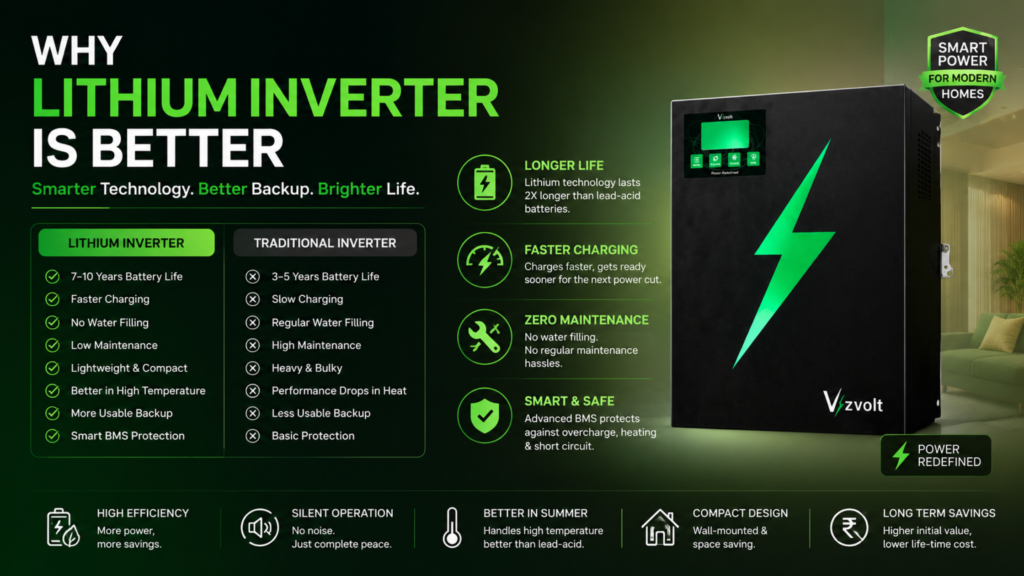
Power backup has become a basic necessity in Indian homes. From online classes and remote work to smart TVs and Wi-Fi routers, electricity now supports almost every daily activity. However, when buying an inverter system, most homeowners still ask one simple question: Lithium battery vs lead-acid battery – which one actually saves more money long-term? Since lithium-based smart inverters are still new in India, many families compare only the upfront cost. But real savings come from looking at the total ownership cost over 5–10 years. Let’s understand this clearly. Understanding Lead-Acid Batteries Lead-acid batteries have been used in Indian households for decades. They are commonly paired with traditional inverters. Key Features: They are affordable at the beginning. That’s why most homes still use them. But the real question is: What happens after 3–5 years? Understanding Lithium Batteries Lithium batteries are newer in the Indian home inverter market. Globally, they are already widely used in electric vehicles, laptops, and energy storage systems. Key Features: Lithium technology focuses on long-term reliability and lower maintenance. Cost Comparison: Lithium Battery vs Lead-Acid Battery Let’s break this down practically. Initial Cost At first glance, lead-acid seems more affordable. But this is only the starting point. Replacement Cost Over 10 Years A key factor in Lithium Battery vs Lead-Acid Battery is replacement frequency. Lead-acid: Lithium: When you calculate total cost over a decade, lithium becomes more competitive. Maintenance Cost Another important difference in Lithium Battery vs Lead-Acid Battery is maintenance. Lead-acid batteries require: Small costs add up over time. Lithium batteries are sealed and maintenance-free. That saves both money and effort. Electricity Efficiency In a Lithium Battery vs Lead-Acid Battery comparison: Lithium batteries have higher charge and discharge efficiency. This means: Lead-acid batteries lose more energy during conversion cycles. Over years, this increases electricity consumption. Even small efficiency differences create noticeable savings over time. Lifespan and Performance Stability Lead-acid battery performance drops gradually after 2–3 years. You may notice: Lithium batteries maintain stable performance for longer periods. Stable voltage also protects sensitive electronics like: Protecting appliances indirectly saves repair and replacement costs. Long-Term Money Saving Example (10-Year View) Let’s consider a simple comparison: Lead-Acid: Lithium: When you combine all costs over 8–10 years, lithium often proves more economical. The difference becomes clearer when power cuts are frequent and usage is high. Why Many Indian Homes Still Choose Lead-Acid The answer is awareness and pricing psychology. Since lithium-based smart inverters are still new in India, most buyers compare only upfront cost. Because this category is currently a push marketing product, education plays a major role. However, as digital dependency increases, homeowners are starting to think long-term instead of short-term. Which Battery Is Better for Modern Indian Homes? If your home mainly runs: Lead-acid may still work. But if your home runs: Lithium technology fits modern needs better. It supports higher efficiency, longer life, and smarter monitoring systems. FAQ: Lithium Battery vs Lead-Acid Battery Is lithium battery safe for home use? Yes. Modern lithium batteries use advanced battery management systems that control temperature and voltage automatically. Is lithium worth the extra cost? If you plan to use your inverter for 5–10 years, lithium often saves more money in the long run. Does lithium charge faster? Yes. Lithium batteries generally charge faster compared to lead-acid. Which Saves More Money? If you are thinking short-term (1–2 years), lead-acid may look cheaper. If you are thinking long-term (8–10 years), lithium usually saves more money due to: The smarter choice depends on how you calculate value. Why Choose Vizvolt Smart Inverter? If you are considering lithium technology for your home, Vizvolt Smart Inverter offers: Vizvolt is built specifically for modern Indian households that want cleaner, safer, and future-ready power backup. Instead of replacing batteries every few years, you invest once and stay worry-free. Because real savings are not about spending less today. They are about spending smarter for the future.

hidden costs of using lead acid inverters in 2026
Blog

Hidden Costs of Using Lead-Acid Inverters in 2026

Power backup is essential for Indian homes. From work-from-home professionals to students attending online classes, electricity now supports daily life. However, many households still rely on lead-acid inverters – a technology that has remained mostly unchanged for decades. In 2026, the question is no longer “Do you need power backup?”The real question is: Are you paying hidden costs for outdated backup technology? Since smart inverters are still a new category in India, many homeowners compare only the purchase price. But the real cost of ownership goes far beyond the initial investment. Let’s break it down clearly. What Is a Lead-Acid Inverter? A lead-acid inverter uses a tubular or flat-plate battery filled with liquid electrolyte (acid). It provides backup during power cuts and is commonly installed in Indian households. It works – but it comes with operational and maintenance demands that many users overlook. The Hidden Costs Most Homeowners Ignore 1. Frequent Maintenance and Water Topping Lead-acid batteries require regular distilled water refilling. If you skip maintenance: Over time, you may need technician visits. These visits cost money and time. In busy urban lifestyles, this becomes a repeated inconvenience. 2. Shorter Battery Lifespan Most lead-acid batteries last 3–5 years, depending on usage and maintenance. That means in 10 years, you may replace the battery at least twice. Battery replacement is not cheap. When you calculate replacement cost over a decade, the “low initial price” argument weakens. 3. Lower Energy Efficiency Lead-acid batteries lose energy during charging and discharging cycles. This results in: Over time, this inefficiency increases your electricity bill. It may not look significant monthly, but it adds up annually. 4. Space Occupation in Small Homes Traditional inverter systems are floor-standing and bulky. They require dedicated space, often in: In modern 2BHK and 3BHK apartments, space is valuable. The cost of losing usable space is often ignored. 5. Safety Risks Lead-acid batteries contain liquid acid. Poor maintenance can lead to: Homes with children or pets should consider safety carefully. Modern homes are designed to be clean and minimal. An exposed battery setup does not align with this design approach. 6. Performance Issues with Modern Appliances Older inverters were designed for: Today, homes use: Lead-acid systems often struggle with modern digital loads, especially during longer power cuts. Performance drops faster than expected. 7. Voltage Instability and Appliance Risk Fluctuating voltage can damage sensitive electronics. Frequent voltage swings reduce the lifespan of: Repairing these appliances costs more than upgrading your inverter system. 8. Environmental Cost Lead-acid batteries require careful disposal. Improper disposal contributes to environmental damage. As India moves toward cleaner energy and sustainable homes, older battery technology becomes less aligned with future needs. The Real Cost Calculation (5-10 Year Perspective) Let’s look at a simple long-term view: When you calculate total ownership cost over 8–10 years, the gap between traditional and smart systems reduces significantly. Sometimes, it even reverses. Why Many Indian Homes Still Use Lead-Acid Systems The answer is simple: awareness. Smart inverter technology is still new in India. Most homeowners compare only upfront pricing. Since it is currently a push marketing category, education plays a major role. However, as urban homes become more tech-driven and digital dependency increases, expectations from power backup systems are changing. The Shift Toward Smart Inverters in 2026 Smart inverters typically offer: They are designed for modern homes that rely heavily on digital devices. Instead of reacting to problems, they allow proactive monitoring. Who Should Reconsider Their Current Inverter? You should evaluate upgrading if: If you are building a new home or renovating, this is the right time to choose future-ready technology. FAQ: Lead-Acid vs Smart Inverter Is lead-acid completely outdated? Not entirely. It still works for basic loads. However, it may not suit modern digital homes efficiently. Is lithium battery safe for homes? Yes. Modern lithium batteries use advanced battery management systems for temperature and voltage control. Is smart inverter expensive? Initial cost is higher. But lower maintenance and longer lifespan balance long-term expenses. The Cost You Don’t See The biggest hidden cost of lead-acid inverters is not money alone. It is: In 2026, homes are smarter. Power backup should match that evolution. Why Consider Vizvolt Smart Inverter? If you are exploring smarter alternatives, Vizvolt Smart Inverter is designed specifically for modern Indian households. It offers: Instead of managing your inverter manually, Vizvolt allows you to monitor and control power intelligently. If you are planning long-term reliability, it may be time to move beyond traditional lead-acid systems. Because power backup should not just support your home. It should support your future.

smart inverter vs traditional inverter what’s the real difference
Blog

Smart Inverter vs Traditional Inverter: What’s the Real Difference?

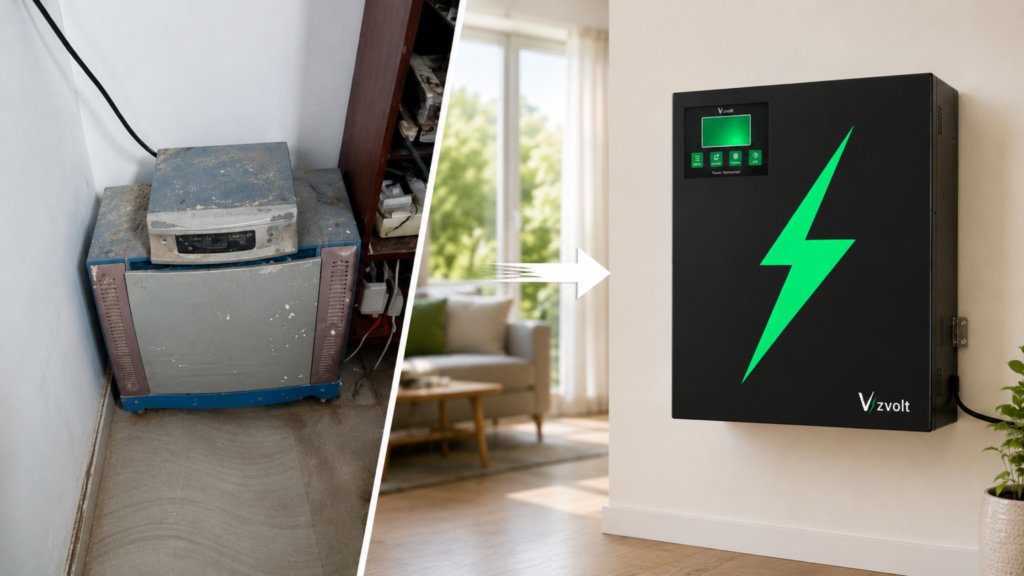
When comparing Smart Inverter vs Traditional Inverter, most homeowners focus only on the initial price. However, the real difference lies in technology, convenience, and long-term value. Power backup is no longer a luxury in India. From remote work and online learning to smart TVs and Wi-Fi routers, electricity supports almost every aspect of daily life. So the real question is: Smart Inverter vs Traditional Inverter – which one is truly better for modern homes? Let’s understand this clearly. Understanding Traditional Inverter? A traditional inverter is the common home backup system most Indian households use. It usually works with a lead-acid battery and provides backup during power cuts. Key Features: It does the job. But it comes with maintenance, safety concerns, and outdated technology. Understanding Smart Inverter? A Smart Inverter is a modern, technology-enabled backup system. It usually comes with: This category is new in India, but globally, lithium-based smart energy systems are already standard. Smart Inverter vs Traditional Inverter: Detailed Comparison Feature Traditional Inverter Vizvolt Smart Inverter Battery Type Lead-Acid Lithium Maintenance Requires water filling Maintenance-free Monitoring Manual checking Mobile app control Design Bulky, floor space needed Wall-mounted, sleek Charging Speed Slow Fast Lifespan 3–5 years 8–10 years Safety Acid risk Sealed & safer Smart Alerts No Yes 1. Maintenance: The Hidden Headache In the Smart Inverter vs Traditional Inverter comparison, maintenance is a major difference. Traditional inverters require: Smart inverters: This makes them ideal for busy households. 2. Safety & Cleanliness Lead-acid batteries contain liquid acid. Improper handling can cause leakage or corrosion. Smart inverters use advanced lithium battery systems with battery management technology. They are cleaner, sealed, and safer for homes with children. 3. Space & Design Traditional inverters: Smart inverters: This is especially important in compact urban homes. 4. Smart Monitoring & Control A key advantage in the Smart Inverter vs Traditional Inverter comparison is visibility. Traditional systems: Smart systems: This allows better control and planning. 5. Long-Term Cost While traditional inverters have a lower upfront cost, they often involve: Smart inverters require a higher initial investment but offer: Over time, they often prove more economical. 6. Performance During Modern Load Older inverters were designed for fans, lights, and TVs. Today, homes run: Smart inverters handle modern electronic loads more efficiently. 7. Future-Ready Technology The biggest difference in Smart Inverter vs Traditional Inverter is future readiness. Traditional systems are built for older energy needs, while smart inverters are designed for connected, digital lifestyles. Why Smart Inverters Are Still New in India India adopted smartphones slowly. The same pattern is happening with smart power backup. Most households are still unaware of: Since this is a push marketing product, education is important. The category is growing, but awareness is still developing. As urban homes become more tech-driven, demand will increase naturally. Who Should Consider a Smart Inverter? You should seriously consider upgrading if: If your current inverter works fine but needs frequent maintenance, it may be time to evaluate smarter options. Frequently Asked Questions (FAQ) Is a smart inverter necessary for small homes? Yes. Even small homes use Wi-Fi, laptops, and LED TVs. Smart monitoring helps manage power better. Is lithium battery safe? Yes. Modern lithium batteries use advanced protection systems that manage temperature and voltage automatically. Is smart inverter expensive? Initial cost is higher. However, lower maintenance and longer life balance the cost over time. The Real Difference The real difference is not just battery type. It is technology, convenience, safety, and long-term reliability. Traditional inverters were built for old energy needs. Smart inverters are built for modern digital homes. As Indian households become more connected and tech-enabled, smart backup systems will move from “luxury” to “standard.” A Smarter Approach to Power Backup If you are exploring this new category, Vizvolt Smart Inverter brings: Vizvolt is designed specifically for Indian households that want smarter, cleaner, and future-ready power backup. If you’re ready to move beyond traditional systems, it may be time to switch to smart. Because power backup should not just work. It should work intelligently.

who should buy a smart inverter flats, independent houses, shops, or offices
Blog

Who Should Buy a Smart Inverter? Flats, Independent Houses, Shops, or Offices

When deciding who should buy a smart inverter, it’s important to look beyond just power cuts and think about how dependent your daily life or business is on electricity. In today’s India, power backup is no longer optional. From remote work and online education to digital payments and smart appliances, electricity supports almost every aspect of modern living. So instead of asking “Do I need backup?”, the real question is: Who should buy a smart inverter for long-term convenience, control, and reliability? Let’s understand this clearly. What Makes a Smart Inverter Different? Traditional inverter systems were built primarily for lights and fans. They offer limited information and Before identifying, it’s important to understand how it differs from traditional systems. Traditional inverters: Smart inverters, on the other hand, provide: This shift from reactive usage to proactive monitoring is what makes smart inverters more relevant today. Flats and Apartments: Ideal for Urban Living Urban homes typically have: In such environments, traditional bulky inverter systems can feel inconvenient. Smart inverters offer: For modern apartments, a smart inverter fits both lifestyle and space constraints perfectly. Independent Houses: Managing Longer Power Cuts Independent homes are another key category when considering who should buy a smart inverter. These homes often experience: In such cases, simply having backup is not enough-you need visibility and control. Smart inverters help by: This makes them a reliable solution for homes with higher power dependency Shops and Retail Stores: Business Cannot Pause For business owners, understanding who should buy a smart inverter is crucial. Retail stores rely heavily on uninterrupted power for: Even a short power interruption can impact revenue and customer experience. Smart inverters offer: For businesses, this is not just convenience-it’s operational security Offices and Workspaces: Productivity Depends on Power Offices are a major segment when analyzing who should buy a smart inverter. Modern workplaces depend on: Power interruptions can directly affect productivity. Smart inverters provide: For startups, co-working spaces, and small offices, smart backup becomes a strategic advantage. Tech-Driven Homes: Future-Ready Living Another important category in who should buy a smart inverter includes tech-driven households. These homes typically use: Such environments require: Smart inverters are designed to support this evolving ecosystem. Who Might Not Need It Immediately? While understanding who should buy a smart inverter, it’s equally important to identify who may not need it right away. You may not need a smart inverter if: However, as digital dependency grows, upgrading becomes more relevant over time. Making the Right Decision Choosing a smart inverter depends on how dependent you are on uninterrupted electricity. The more your daily routine, business operations, or digital infrastructure relies on stable power, the more valuable monitoring and clarity become. Modern homes and workplaces need more than emergency backup. They need intelligent energy management. At Vizvolt, we provide smart lithium inverter solutions designed specifically for modern Indian homes and businesses. Our systems offer real-time battery monitoring, reduced maintenance requirements, improved safety, and hybrid-ready capability. Whether you live in a flat, manage an independent house, run a shop, or operate an office, Vizvolt delivers clarity, control, and confidence during power cuts. Because power backup should not just work. It should inform, protect, and prepare you for the future.

hybrid ready homes start with smarter power systems
Blog

India’s 2030 Energy Shift: Hybrid-Ready Homes Start with Smarter Power Systems

India’s 2030 Energy Shift is not just about large solar farms or electric vehicles. It is about how energy will be produced, stored, and managed inside everyday homes. Power backup is evolving into something much more intelligent. In the coming years, homes will no longer simply consume electricity—they will actively manage it. And this transformation begins with smarter power systems. Understanding India’s 2030 Energy Shift To understand India’s 2030 Energy Shift, we need to look at the broader direction of the country’s energy roadmap. Key developments include: 👉 The result: homes will become active participants in energy management. Electricity will no longer come from a single source. Instead, it may flow from: Managing this complexity requires smarter infrastructure at the household level. What Is a Hybrid-Ready Home in India’s 2030 Energy Shift? A key part of India’s 2030 Energy Shift is the concept of hybrid-ready homes. It can: Hybrid readiness is not about installing everything at once. It is about building a foundation that supports future energy integration. Preparation begins with smarter decisions today. Why Traditional Systems Fall Short in India’s 2030 Energy Shift For decades, Indian households relied on conventional inverter systems built for a simpler time. These systems were primarily designed to support: But modern homes are far more energy-dependent. Today’s households rely on electricity for: At the same time, renewable integration and grid variability are increasing. Traditional systems that only activate during outages offer limited insight into energy usage, battery health, or real-time performance. As the energy landscape evolves, backup systems must evolve as well. Smart Monitoring: The Core of India’s 2030 Energy Shift Hybrid-ready homes require visibility. Smart energy systems provide: This transforms power backup from a reactive solution into an intelligent system. Instead of guessing during outages, households gain clarity.Instead of manual checking, they receive real-time information.Instead of sudden failure, they get early warnings. Energy management is shifting from “backup-only” to “intelligent optimization.” Why Upgrading Before 2030 Is a Smart Move Energy transitions are gradual but inevitable. Homes that start upgrading now are better positioned for: Waiting until large-scale infrastructure shifts force upgrades can lead to rushed decisions and higher costs. Small, thoughtful upgrades today reduce friction tomorrow. Moving from Backup to Energy Awareness India’s 2030 shift is not only about producing cleaner energy. It is about managing energy more intelligently at the household level. That means: Modern energy systems must deliver clarity, not confusion. The Subtle Shift Already Happening Hybrid readiness does not require dramatic installations. It begins with simple upgrades: Homes that adopt smarter infrastructure today will adapt seamlessly to tomorrow’s hybrid energy environment. 2030 Starts at Home India’s energy future will not be shaped by policy alone. It will be shaped by the decisions made inside homes. Hybrid-ready living is no longer a luxury concept. It is a practical step toward resilience, efficiency, and preparedness. The transition toward smarter, data-aware power systems has already begun. For households looking to take that first intelligent step, Vizvolt Smart Inverter are designed with exactly this future in mind — offering real-time monitoring, reduced maintenance, and hybrid-ready thinking without complexity. Because the energy shift of 2030 does not begin with infrastructure. It begins with smarter homes.

why ‘battery guesswork’ is a big problem in indian homes (and how smart inverters fix it)
Blog

Why ‘Battery Guesswork’ Is a Big Problem in Indian Homes (And How Smart Inverters Fix It)

Battery Guesswork in Indian Homes is a silent problem that most families experience but rarely recognize. Power cuts are common across many parts of India. But the real issue is not the outage itself—it is the uncertainty that comes with it. Most households rely on traditional inverter systems. While these systems provide backup, they leave users guessing about one important question: How much power is actually left? This lack of clarity creates stress, poor decision-making, and unexpected disruptions. Understanding Battery Guesswork in Indian Homes? To understand Battery Guesswork in Indian Homes, think about everyday situations: Traditional inverters typically show only: They do not show: This forces users to depend on assumptions instead of actual data. Why Battery Guesswork in Indian Homes Is a Bigger Problem Than It Seems At first, this uncertainty feels manageable. But over time, Battery Guesswork in Indian Homes creates real challenges. 1. Sudden Power Failure During Important Moments One of the most frustrating effects of unexpected shutdown. This happens because battery performance declines gradually, but users have no visibility. 2. Battery Health Issues Go Unnoticed Another major issue with Battery Guesswork in Indian Homes is the lack of insight into battery condition. Without monitoring: By then, battery replacement becomes unavoidable. 3. Inefficient Power Usage During long power cuts, families often: This confusion is a direct result of Battery Guesswork in Indian Homes. Without clarity, energy usage becomes inefficient. 4. Maintenance Without Real Confidence Traditional inverter systems require: Even after all this effort, Battery Guesswork in Indian Homes remains. Maintenance does not provide real visibility into performance. Why Battery Guesswork in Indian Homes Is Increasing Today Modern homes are far more energy-dependent than before. Today’s households rely on: As energy demand becomes more complex, Battery Guesswork in Indian Homes becomes more problematic. The gap between usage and visibility continues to grow. How Smart Inverters Eliminate Battery Guesswork in Indian Homes Smart inverter systems are designed specifically to solve Battery Guesswork in Indian Homes. They provide: This replaces uncertainty with complete clarity. From Guesswork to Energy Awareness The shift away from Battery Guesswork in Indian Homes is about more than just technology. It is about: Instead of reacting to problems, users can: Power backup becomes predictable and manageable. Battery Guesswork in Indian Homes: Final Insight Battery Guesswork in Indian Homes may seem like a small inconvenience, but it has a significant impact on everyday life. It affects: As homes become more digital and connected, clarity becomes essential. A Smarter Way Forward for Indian Homes Modern homes need smarter, more reliable power solutions. Smart inverter systems offer: Solutions like Vizvolt are designed to eliminate guesswork and deliver a clean, seamless, and intelligent power experience for modern Indian homes. Because power backup should not leave you guessing. It should give you complete control and confidence.

from fans to wi fi how indian homes have become smarter but inverters haven’t
Blog

From Fans to Wi-Fi: How Indian Homes Have Become Smarter – But Inverters Haven’t

Smart Homes in India have undergone a massive transformation in the last decade. Step into any modern Indian home today, and you will immediately notice how technology has seamlessly integrated into daily life. Homes have clearly evolved into intelligent ecosystems. But in one corner of the house, something still feels outdated-the inverter. How Smart Homes Have Rapidly Evolved To understand the gap, we must first understand how Smart Homes in India have changed over time. A decade ago, electricity usage was simple. Most homes relied on power for: Today, the situation is very different. Modern Smart Homes in India depend heavily on electricity for: Electricity is no longer just a utility-it is the backbone of modern living. The Rise of Smart Homes in India The rapid growth of Smart Homes in India is driven by changing lifestyles and increasing digital adoption. Homeowners are investing in: This shift has changed expectations. Today’s users want: Convenience, control, and clarity have become standard expectations. Why Inverters Feel Outdated in Smart Homes Despite the evolution of Smart Homes in India, traditional inverters have not kept pace. Most conventional systems: This creates a clear disconnect between advanced home systems and outdated power backup. While everything else in the home is becoming smarter, the inverter remains stuck in the past. The Real Gap in Smart Homes: Lack of Visibility The biggest issue in Smart Homes in India is not just outdated hardware—it is the lack of visibility. Modern homes allow you to: But when the power goes out, many households still rely on guesswork. You don’t know: This breaks the seamless experience of a smart home. What Smart Homes Expect from Modern Power Systems To truly align with Smart Homes in India, power backup systems need to evolve. A modern inverter should offer: In simple terms, it should behave like every other smart device in the home. Why This Gap Is Becoming More Noticeable The gap in Smart Homes in India is becoming more evident due to several factors: As homes become smarter, weak links stand out more clearly. Power backup can no longer remain the only “non-smart” system. The Shift Toward Smarter Power Backup in Smart Homes in India The next phase of Smart Homes in India is already taking shape. Homes are gradually moving toward: Power backup is evolving from a basic necessity to an intelligent system. Smart Homes in India: Closing the Gap To fully realize the potential of Smart Homes in India, every component of the home must align—including power backup. An outdated inverter creates: Closing this gap improves both convenience and confidence. A Smarter Direction for Modern Indian Homes Modern homes deserve modern energy solutions. Smart inverter systems offer: Solutions like Vizvolt are designed specifically for Smart Homes in India, delivering a clean, intelligent, and future-ready power experience. Because in a truly smart home, every system should work together-quietly, efficiently, and intelligently.

power cuts in india are changing — is your inverter smart enough to handle them
Blog

Power Cuts in India Are Changing – Is Your Inverter Smart Enough to Handle Them?

Power cuts in India are not new. What is new is how unpredictable and demanding they have become. A few years ago, a power cut meant lights and fans going off for some time. Today, it affects work calls, online classes, Wi-Fi, security systems, and daily routines. The nature of power cuts has changed-but most inverter systems have not. This gap is creating new problems inside Indian homes. Power Cuts Don’t Look the Same Anymore Earlier, power cuts were: Today, they are often: In many cities and towns, power now goes off without warning and comes back without a fixed timeline. This uncertainty changes how households experience outages. Modern Homes Depend on Constant Power Indian homes today run on electricity more than ever. Power is needed for: During long or repeated power cuts, even a short loss of backup can disrupt daily life. This is where the limitations of traditional inverters become visible. The Problem with Old-Style Inverters in Today’s Reality Most traditional inverters were designed for a simpler time. They usually: When power cuts were short, this was manageable. With today’s unpredictable outages, it creates stress. People start guessing: This guesswork is the real problem. Why Power Cuts Now Need Smarter Backu The issue is no longer just power loss. It’s lack of information during power loss. During long outages, households need: In short, they need power management, not just power backup. What “Smart Enough” Really Means Today A smarter inverter is not about complexity. It’s about clarity and control. In today’s conditions, a power backup system should: This is where smart inverter technology starts to matter. How Vizvolt Fits into This Changing Landscape Vizvolt Smart Inverter is built keeping this new reality in mind. Instead of treating power backup as an emergency-only device. Vizvolt focuses on: The idea is simple when power cuts change, backup systems must change too. Power Backup Needs to Evolve with Power Cuts Power cuts in India are becoming more unpredictable, not less. Homes are becoming more dependent on electricity, not less. In this changing environment, relying on old systems creates stress and uncertainty. Smarter power backup solutions help households move from reacting during outages to staying prepared. And this shift-toward clarity, calm, and better control-is why modern homes are beginning to rethink what “backup” should really mean.

can an inverter be controlled from your phone yes here’s how smart inverters work
Blog

Can an Inverter Be Controlled from Your Phone? Yes – Here’s How Smart Inverters Work

For years, inverters in Indian homes worked quietly in a corner. No screen, no updates, no information-just a few lights and a lot of guessing. Today, almost everything in our homes can be checked on a phone. So a simple question naturally comes up: Can an inverter also be controlled or monitored from a smartphone? The answer is yes.And this is where smart inverters change the experience completely. Why People Feel Disconnected from Their Inverter Most traditional inverters don’t tell users much. People often don’t know: During power cuts, this lack of information creates stress-especially when work, online classes, or Wi-Fi depend on electricity. Smart inverters were designed to solve this exact gap. What Does “Phone-Controlled Inverter” Actually Mean? A phone-connected inverter doesn’t mean you are constantly controlling buttons. It simply means: Through a mobile app, users can see real-time data instead of guessing. How Smart Inverters Use App + IoT (In Simple Words) Smart inverters use IoT (Internet of Things) technology. This allows the inverter to: The app becomes a window into your power backup system. No technical knowledge needed-just clear information. What Can You See on a Smart Inverter App? While features vary, most smart inverter apps show things like: Instead of checking lights or guessing, users get clarity on their phone. Why This Matters in Indian Homes In India, power cuts are: During these moments, people want answers-not confusion. With app-based monitoring: This turns panic into planning. Is Using an App Complicated? This is a common concern-but it doesn’t have to be. Well-designed smart inverter apps are made for everyday users: The technology works quietly in the background.You only check it when you want to. How This Changes Daily Life When people can check their inverter on a phone: Power backup becomes something you trust, not something you constantly manage. Where Vizvolt Fits In Vizvolt Smart Inverter is built around this modern approach to power backup. Instead of hiding information behind basic indicators, Vizvolt focuses on: The idea is not to make power backup complicated – but to make it clear, calm, and reliable. Power Backup Should Feel Connected, Not Confusing In today’s homes, phones already help us manage work, health, and daily routines. So it makes sense that power backup also becomes easier to understand. Smart inverters bring transparency where there was once guesswork. They don’t just provide backup-they provide confidence. And that shift toward clarity and control is exactly why app-enabled solutions like Vizvolt are becoming part of modern Indian homes.

what is real time battery monitoring and why it matters during long power cuts
Blog

What Is Real-Time Battery Monitoring and Why It Matters During Long Power Cuts

Power cuts are common in India. What usually makes them stressful is not the power cut itself-but not knowing how long the backup will last. Most homes still depend on traditional inverter systems where people guess, wait, and worry. This is where real-time battery monitoring becomes important, especially during long and unpredictable power cuts. In this blog, we explain what real-time battery monitoring actually means, why it matters for Indian households, and how it changes the power-backup experience. What Is Real-Time Battery Monitoring? (In Simple Words) Real-time battery monitoring means knowing the actual condition of your battery at any moment-not an estimate, not a guess. Instead of basic lights like charging or low, real-time monitoring tracks live data such as: In short, it tells you what is happening now, not what might happen. Why Guesswork Fails During Long Power Cuts In many Indian homes, power cuts don’t last 10-15 minutes. They last hours-especially during: With regular inverters, people often: This stress happens because there is no clear information. The Biggest Problem with Traditional Inverter Displays Most traditional inverter displays show: What they don’t show: As a result, users only find out something is wrong when the battery suddenly fails. How Real-Time Monitoring Changes the Experience Real-time battery monitoring changes power backup from a reaction-based system to an information-based system. Here’s how it helps during long power cuts: 1. You Know How Long the Power Will Last Instead of guessing, you can see realistic backup information based on current usage. 2. You Can Make Smarter Decisions If you know how much backup is left, you can decide: 3. Less Panic, More Control Clarity reduces stress. When people know what’s happening, they stop checking repeatedly. 4. Early Warning Before Problems Real-time data helps identify battery issues before complete failure. Why This Matters Especially for Modern Indian Homes Today’s homes depend on power for more than lights and fans.They rely on electricity for: During long power cuts, losing backup suddenly can disrupt: Real-time monitoring helps homes stay planned, not panicked. Is Real-Time Monitoring Complicated? This is a common concern-but it shouldn’t be. Good real-time monitoring systems are designed to: The goal is not to overwhelm users with data, but to give clear, useful insight. Where Vizvolt Fits In Vizvolt Smart Inverter is built around the idea that power backup should be transparent and stress-free. Instead of hiding information behind basic indicators, Vizvolt focuses on: The intention is simple: when users understand their power, they trust it more. Long Power Cuts Need Better Information, Not More Checking Long power cuts are a reality in India. But confusion, stress, and guesswork don’t have to be. Real-time battery monitoring helps households move from: And this shift toward transparency is exactly why modern power-backup solutions like Vizvolt are becoming relevant for today’s Indian homes.

Shopping Cart
Scroll to Top