
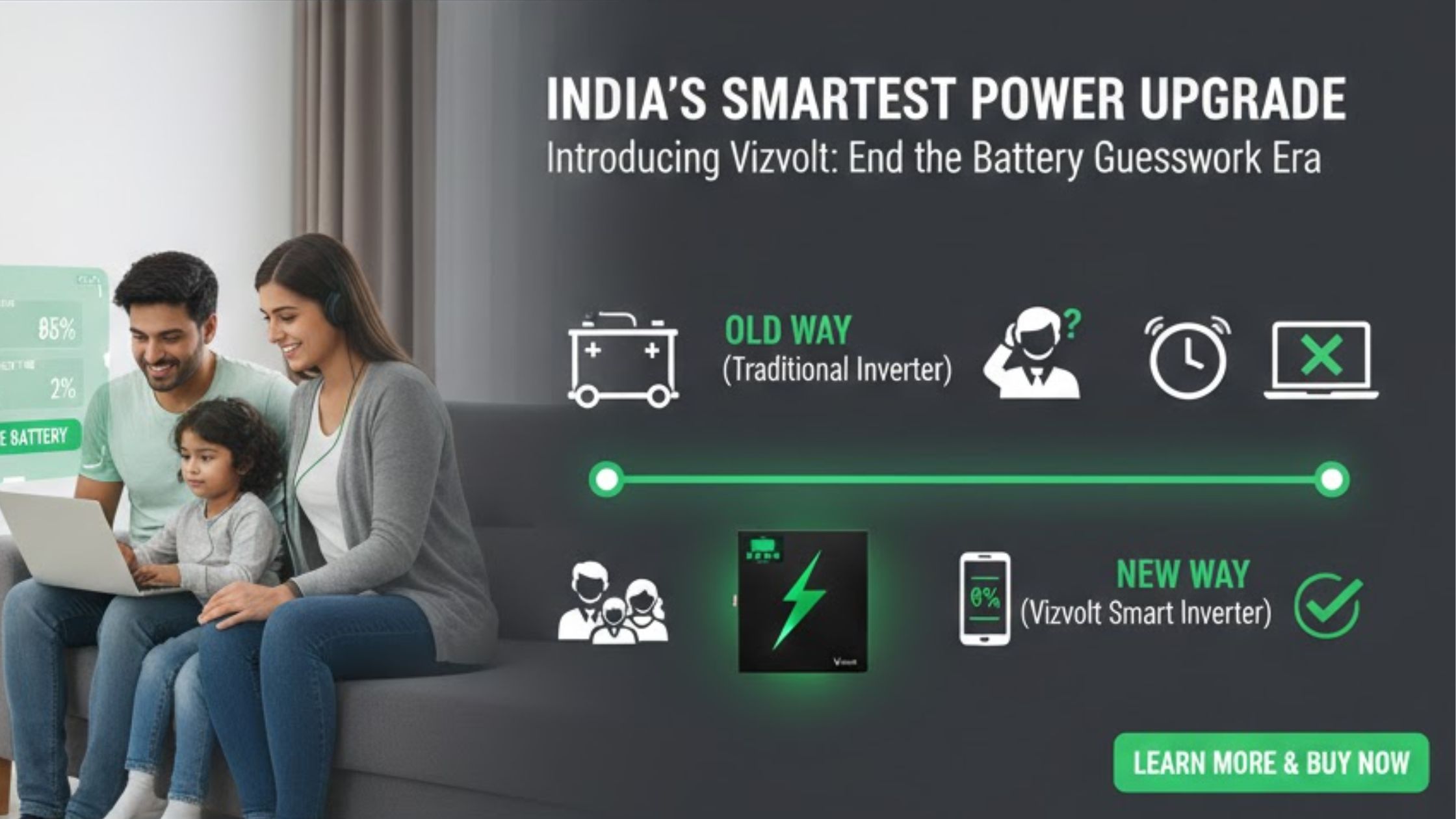
Power cuts are common in India. But the real problem is not the power cut itself. The real problem is not knowing what will happen next. Most Indian households rely on traditional inverter systems. And while these systems provide backup, they leave users guessing about one important thing:
How much power is actually left?
This silent uncertainty is called battery guesswork – and most families don’t even realize they are living with it.
What Is Battery Guesswork?
Battery guesswork happens when:
- You don’t know the real condition of your inverter battery
- You assume the backup will last “around 3-4 hours”
- You keep checking the inverter display again and again
- You wait for the sudden low-battery beep
Traditional inverters only show basic indicators:
- Charging
- Full
- Low
They do not show:
- Real-time battery health
- Accurate backup duration
- Battery degradation
- Usage impact on remaining power
So people rely on assumptions instead of information.
Why Battery Guesswork Is a Bigger Problem Than You Think
At first, it feels normal.
But over time, guesswork creates stress and hidden costs.
1. Sudden Power Failure During Important Moments
Work-from-home call.
Online exam.
Important presentation.
Evening family time.
The backup suddenly ends earlier than expected.
This happens because battery health reduces over time – but traditional systems don’t clearly show it.
2. Battery Damage Goes Unnoticed
Most batteries weaken slowly.
Without proper monitoring:
- You don’t know the State of Health (SOH)
- You don’t know performance drop
- You only notice when backup becomes very short
By then, replacement becomes unavoidable.
3. Overuse or Underuse of Power
During long power cuts, families often:
- Turn off everything out of fear
- Or keep everything running assuming backup is enough
Both happen because there is no clarity.
4. Manual Maintenance Adds More Uncertainty
Traditional systems require:
- Water level checks
- Terminal cleaning
- Leakage monitoring
Even after doing all this, there is still no clear insight into battery condition.
So effort does not guarantee confidence.
Why This Problem Is Increasing in Modern Homes
Homes today are very different from 10-15 years ago.
Now households depend on:
- Wi-Fi routers
- Smart TVs
- Laptops
- Online classes
- Security systems
Power usage is more complex.
But battery visibility has not evolved at the same speed.
That gap creates more guesswork.
What a Modern Power Backup System Should Do
Instead of basic lights, a modern inverter should:
- Show real-time battery percentage
- Display realistic backup time
- Monitor battery health continuously
- Alert users before failure
- Reduce manual intervention
In simple words:
It should remove uncertainty.
How Vizvolt Addresses Battery Guesswork
Vizvolt Smart Inverter is designed specifically to eliminate battery guesswork in Indian homes.
Instead of hiding information behind simple indicators, Vizvolt focuses on:
- Real-time battery monitoring
- Clear backup visibility
- Health tracking (SOC & SOH)
- Reduced maintenance stress
- Smart alerts for early problem detection
The goal is simple: Give users clarity instead of assumptions.
When people understand their power system, they manage it better and trust it more.
The Shift Indian Homes Are Beginning to Make
Earlier, backup power meant “something is better than nothing.”
Today, expectations are changing.
Families want:
- Transparency
- Predictability
- Control
- Peace of mind
Battery guesswork may seem small, but removing it changes the entire experience of a power cut.
The Real Upgrade Is Clarity
Power cuts may continue. But confusion doesn’t have to. The biggest upgrade in modern power backup is not just capacity – it is visibility.
And that shift from guesswork to clarity is exactly why smart solutions like Vizvolt are becoming relevant for modern Indian homes.