
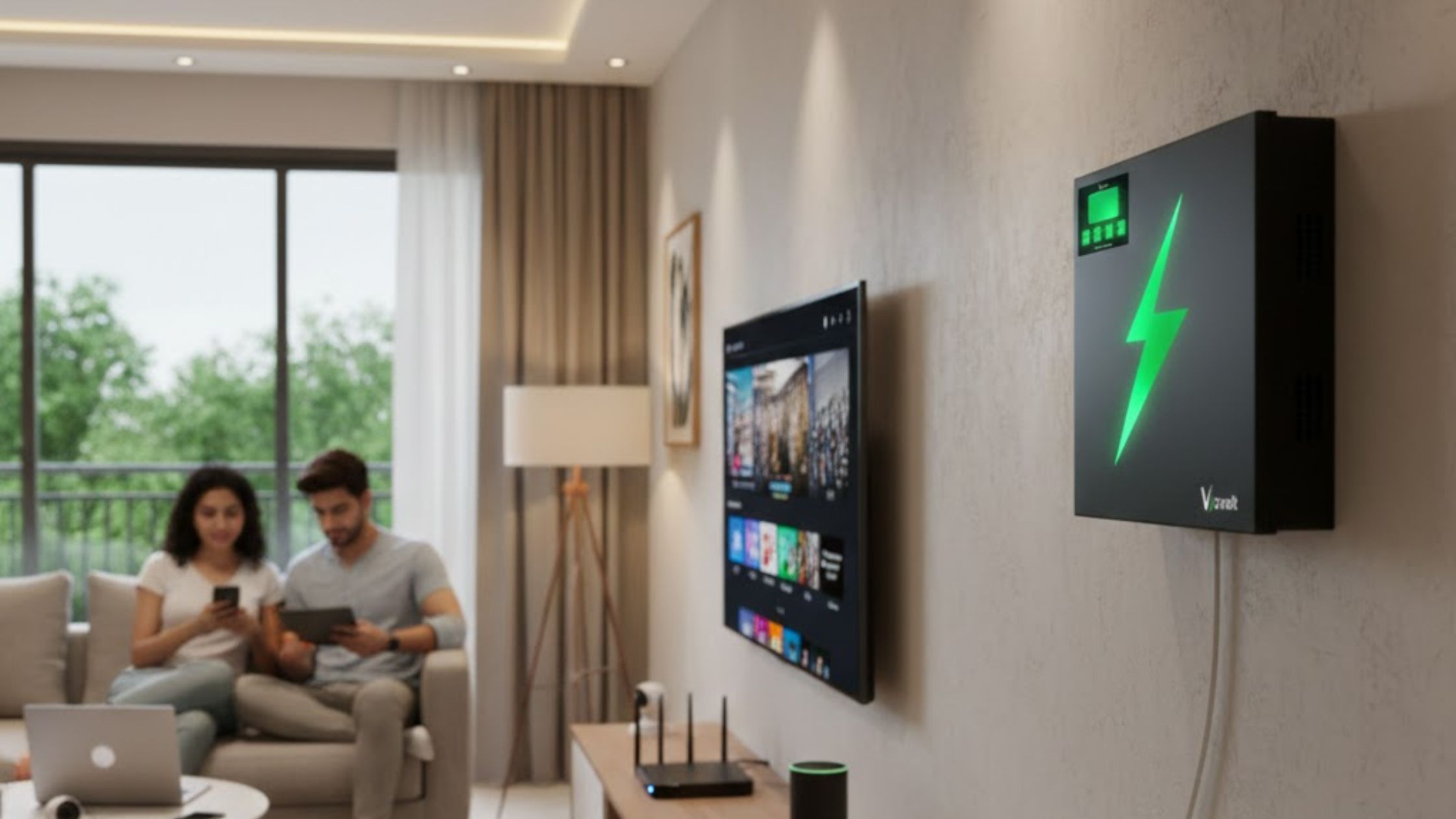
Walk into any modern Indian home today and you’ll notice something interesting.
The TV is smart.
The doorbell is smart.
Lights can be controlled from a phone.
Wi-Fi routers power work calls and streaming.
Even air conditioners come with apps.
Homes have evolved.
But in one corner, something hasn’t.
The inverter.
Indian Homes Have Changed Rapidly
Ten to fifteen years ago, electricity in most homes powered:
- Lights
- Fans
- Basic appliances
Today, electricity supports:
- Work-from-home setups
- Online classes
- Wi-Fi routers
- Smart TVs and streaming
- Security cameras
- Charging multiple devices
Power is no longer a convenience.
It’s infrastructure.
Yet most inverters were designed for a very different era.
The Smart Home Trend Is Growing in India
Indian households are increasingly investing in:
- Smart lighting systems
- Voice assistants
- App-controlled appliances
- Energy-efficient devices
People want visibility, automation, and control.
They expect:
- Real-time information
- Remote monitoring
- Minimal manual effort
But when it comes to power backup, many still rely on systems that:
- Show only basic indicator lights
- Require manual battery checks
- Need water refilling
- Offer no real-time clarity
This creates a mismatch.
Why Traditional Inverters Feel Outdated Today
Traditional inverters were built for simple backup.
They assume:
- Short power cuts
- Low appliance load
- Manual maintenance
But today’s homes demand:
- Stable backup for Wi-Fi and laptops
- Continuous power during long calls
- Clear information during outages
Most old systems cannot tell you:
- How much real backup time is left
- Whether the battery health is declining
- If something is wrong before failure
In a smart home environment, this lack of clarity feels outdated.
The Real Gap: Visibility and Control
Smart homes run on information.
You can check:
- AC temperature from your phone
- Camera feeds remotely
- Electricity usage digitally
But when the power goes out, many households still guess.
Guesswork does not belong in a smart ecosystem.
Power backup should be just as transparent as other home systems.
What a Modern Inverter Should Offer
To match today’s smart homes, a power backup system should provide:
- Real-time battery monitoring
- Clear backup time estimates
- Health tracking (SOC & SOH)
- Reduced manual maintenance
- App-based access
- Safe, cleaner battery technology
In short, it should feel like part of the home’s intelligent network – not an outdated attachment.
Why This Shift Matters Now
India is experiencing:
- Higher electricity consumption
- Longer and unpredictable power cuts
- Extreme weather conditions
- Increased device dependency
As homes get smarter, weak links become more visible.
Power backup can no longer remain the only “non-smart” element in a connected home.
Where Vizvolt Fits In
Vizvolt Smart Inverter was created with this exact shift in mind.
Instead of treating backup as a basic emergency device, Vizvolt focuses on:
- Lithium-based modern battery technology
- Real-time monitoring through app connectivity
- Low maintenance, no water filling
- Cleaner, compact wall-mounted design
- Clear battery insights for informed decisions
The goal is simple:
If homes are smart, their power backup should be smart too.
A Smart Home Needs Smart Power
Indian homes have evolved from fans and tube lights to Wi-Fi routers and digital lifestyles. Power backup must evolve with them. Because in a truly modern home, technology should work quietly, intelligently, and without constant supervision.
And that is exactly where the next generation of smart inverters is heading.