
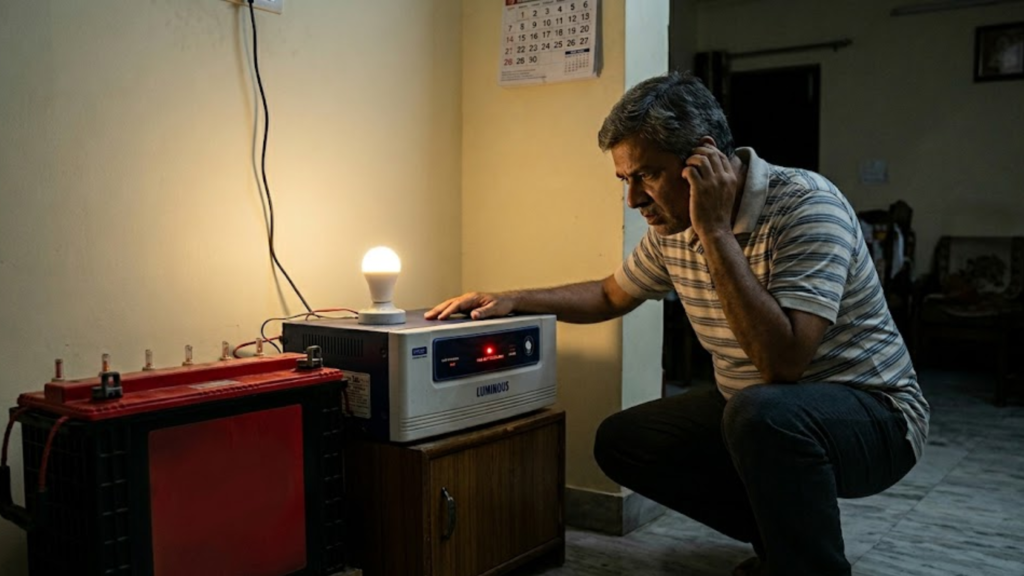
Every Indian household has been there. It’s 43°C outside. The ceiling fans are spinning. The kids are studying. And then – the inverter beeps, flickers, and dies. Thirty minutes of backup when you expected four hours.
The inverter low backup problem is one of the most searched issues during summer, especially in areas where power cuts can last for many hours a day. Whether you are dealing with frequent outages in a city or town, a failing inverter backup is more than just inconvenient – it can disturb your daily routine, work, studies, and comfort.
This guide gives you the exact reasons your inverter is failing, the formula to calculate your correct backup time, and – if your current setup is beyond fixing – why thousands of Indian homes are upgrading to the Vizvolt VAJR, the all-in-one lithium smart inverter built for Indian summers.
8 Common Causes of Inverter Low Backup Problem
Understanding your low backup problem starts with diagnosing the root cause. Most cases fall into one of these eight categories:
| 1. Old or Degraded Battery After 3–4 years, lead-acid batteries lose 40–60% of their original capacity. A battery rated 150Ah may only deliver 80Ah by year 4. Fix: Test battery voltage. If below 12V at full charge, replace it. | 2. Overloading the Inverter Running ACs, geysers, or washing machines on a home inverter pushes it far beyond its rated capacity, draining the battery in minutes. Fix: Check your inverter’s VA rating. Disconnect heavy appliances during power cuts. |
| 3. Low Electrolyte / No Water Top-Up Lead-acid batteries need distilled water every 45–60 days. Exposed plates cause irreversible sulphation and capacity loss. Fix: Top up with distilled water only. Never use tap water or acid. | 4. Loose or Corroded Wiring Bad connections cause internal resistance, meaning more energy is wasted as heat than reaches your appliances. Fix: Clean terminals with baking soda paste. Tighten all connections. Replace damaged cables. |
| 5. Extreme Summer Heat In Indian summers (40–47°C), battery chemical reactions accelerate. Batteries self-discharge faster and capacity drops by up to 20%. Fix: Keep the inverter in a ventilated, shaded spot. Avoid direct sunlight or closed rooms. | 6. Wrong Battery Size for Load A 100Ah battery with a 1500VA inverter running 10 appliances will drain in 30 minutes. The math simply doesn’t work. Fix: Use the backup formula below to choose the right battery capacity for your actual load. |
| 7. Charging Problem / Short Supply Window If MSEDCL or TNEB power returns for only 1–2 hours, and your inverter has a slow charger, the battery never reaches full charge. Fix: Use an inverter with fast-charging capability. Vizvolt VAJR’s smart charger maximises every minute of supply. | 8. Old Inverter Technology Square-wave and old modified sine-wave inverters are inherently less efficient. They waste 15–25% of battery energy as heat during conversion. Fix: Upgrade to a pure sine wave inverter with high conversion efficiency (95%+). |
How to Calculate Inverter Backup Time (Simple Formula)
Before blaming your inverter, verify your inverter backup time mathematically. The formula is straightforward:
| BACKUP FORMULA Backup Time (hours) = [Battery Capacity (Ah) × Battery Voltage (V) × Efficiency] ÷ Total Load (Watts) STANDARD EFFICIENCY RATES: Lead-acid inverter: 70–75% Pure sine wave lithium: 92–95% The inverter low backup problem is common in old battery systems. |
Real Example: Typical Indian Home Setup
Let’s calculate backup for a home running 3 ceiling fans + 5 LED bulbs + 2 phone chargers — a very common load scenario during evening power cuts:
| Appliance | Qty | Watts Each | Total Watts |
| Ceiling Fan | 3 | 75W | 225W |
| LED Bulb | 5 | 10W | 50W |
| Phone Charger | 2 | 10W | 20W |
| Total Load | 295W |
Total Load = 295 Watts
Battery: 150Ah at 12V (standard home inverter)
| LEAD-ACID CALCULATION: Backup = (150 × 12 × 0.72) ÷ 295 = 1296 ÷ 295 ≈ 4.4 hours (new battery) But a 3-year-old lead-acid battery retains only ~55% capacity: Actual backup = 4.4 × 0.55 ≈ 2.4 hours If your inverter gives less time, this inverter low backup problem needs quick attention. Vizvolt VAJR with lithium (95% EFFICIENCY): Backup = (150 × 12 × 0.95) ÷ 295 = 1710 ÷ 295 ≈ 5.8 hours And lithium retains 95% capacity even after 5 years = ~5.5 hours backup Vizvolt helps solve the inverter low backup problem with lithium technology. |
This is why the inverter backup time India context matters. In peak summer, when temperatures hit 44°C in interior Maharashtra or Rajasthan, a degraded lead-acid battery might give you just 45 minutes on that same load. The lithium difference is not a marketing claim – it’s basic battery chemistry.
According to the Central Electricity Authority, peak load shedding in northern India averages 4-6 hours daily in summer months.
Not every inverter low backup problem requires a full replacement. Use this decision guide:
| REPAIR – Do This If… | REPLACE – Time to Upgrade If… |
| Battery is less than 3 years oldPlates just need distilled water top-upCharging unit failed but battery is fineMinor wiring or connection issueLoad suddenly increased beyond capacity | Battery is 4+ years old with weak output Plates are sulphated or swollen Inverter is a lead-acid model (10+ years old)Backup dropped from 4 hrs to under 1 hr Repair cost > 40% of new inverter price |
Pro Tip: If your total inverter + battery system is over 6 years old and runs on lead-acid technology, the repair vs replace math almost always favours replacement – especially with lithium prices dropping 40% over the last three years in India.
Inverter dying in summer? Vizvolt VAJR gives 2–3x more backup. Zero maintenance.
Built for India. → Shop Now at vizvolt.in
Summer heat increases the inverter low backup problem in India.
How Vizvolt VAJR Solves the Inverter Low Backup Problem
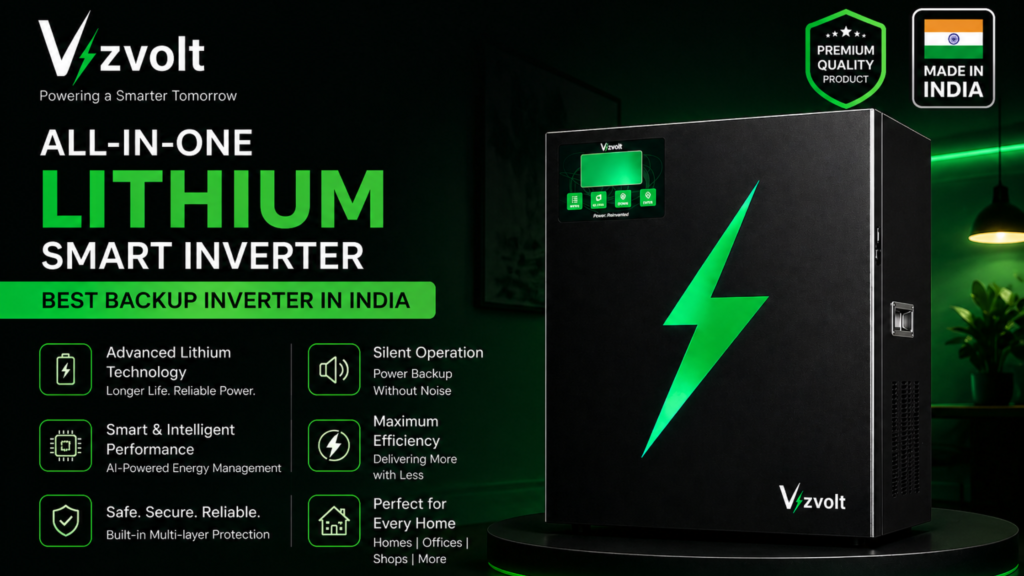
Most Indian inverters were engineered in the 2000s for a different power landscape – fewer appliances, longer supply windows, and cooler summers. The Vizvolt VAJR was built from scratch for 2025 Indian homes: frequent cuts, shorter charging windows, extreme heat, and a growing load of modern appliances.
Vizvolt helps solve the inverter low backup problem with lithium technology.
| VAJR Feature | Why It Fixes Low Backup |
| Pure Sine Wave Output | Protects all sensitive appliances – TVs, laptops, medical equipment. |
| Lithium Battery Ready | Lithium batteries last 3x longer, charge faster, and handle Indian summer heat without capacity drop. |
| Smart Battery Management | Built-in BMS prevents overcharge, deep discharge, and heat damage – the #1 cause of low backup. |
| Zero Topping Required | No distilled water, no acid spills – sealed maintenance-free design. |
| Overload Auto-Cutoff | Detects excess load and safely disconnects before damaging your battery or inverter. |
| Fast Recharge in Power Window | When power comes back for only 2 hours, VAJR charges at full speed so it is ready for the next power cut. |
A conventional lead-acid system with the same 150Ah battery, after 3 years of harsh summer use, may deliver only around 90 minutes of backup per power cut. VAJR’s 5.5-hour available backup creates enough support to handle most common load-shedding periods.
Whether you are facing regular power cuts, or low backup problem in a busy city or frequent outages in a growing town, the Vizvolt VAJR solves the inverter low backup problem at its root – not with a temporary fix, but with technology designed for the real power needs of Indian homes.